
Liquid PPF Secrets Revealed: How Manual Re-Leveling Fixes Rock Chips Without a Re-Install
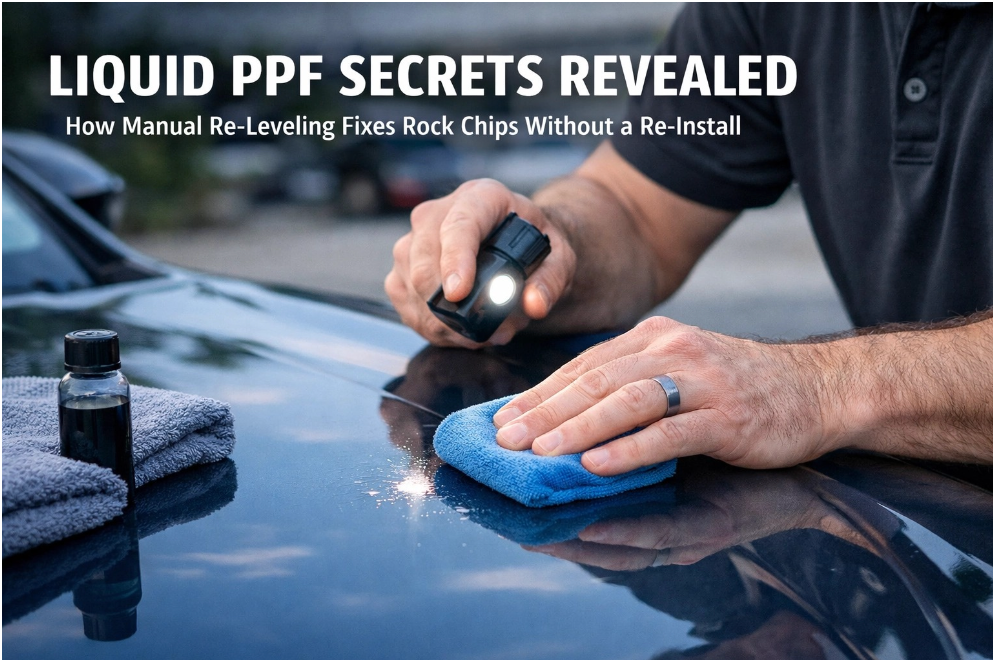
Houston drivers face a daily gauntlet of road hazards that turn pristine paint into a topographical map of rock chips and pitting. Between the heavy construction near the Pearland corridor and the constant debris kicked up by semi-trucks on I-45, traditional paint protection methods often struggle to keep up with the sheer volume of impact. While standard Paint Protection Film (PPF) offers a physical barrier, it has one major flaw: once the film is punctured or scarred by a high-velocity rock, the entire panel usually requires a costly and time-consuming re-installation. This is where Liquid Paint Protection Film (LPPF) changes the game through its unique ability to be manually re-leveled without stripping the vehicle.
What Exactly Is Liquid Paint Protection Film (LPPF)?
Liquid Paint Protection Film is a high-solids, hand-applied protective layer that bridges the gap between traditional ceramic coatings and thermoplastic urethane (TPU) films. Unlike ceramic coatings that are measured in microns, LPPF builds significant thickness on the surface, creating a sacrificial barrier designed to absorb kinetic energy from road debris. It is crucial to understand that this is not a spray-on product or a simple wax; it is a meticulous, hand laid process where the material is worked into the paint's surface to create a seamless, edge-free bond.
At Ceramic Enthusiasts, we focus on this hand-applied method because it allows for a level of precision that machine-cut films often miss. By hand applying the liquid film, we ensure that every contour of your vehicle: from the aggressive lines of a black RAM truck to the intricate vents of a sports car: is fully encapsulated. This process results in a finish that is optically clear and significantly thicker than any traditional coating, providing the robust rock chip protection Houston drivers need.
Why Are Houston Road Conditions Creating a Crisis for Car Owners?
The infrastructure in the Greater Houston area, including Pasadena and South Houston, is in a state of perpetual expansion, which means gravel, asphalt chunks, and construction debris are permanent fixtures on our highways. When a rock hits your hood at 70 mph, it creates a localized point of extreme pressure. Without a thick sacrificial layer, that pressure transfers directly to your clear coat, resulting in a chip that exposes the primer or bare metal.
Humidity and extreme Texas heat further complicate the issue. High temperatures can make traditional adhesives in standard PPF brittle over time, leading to yellowing or edge lifting. LPPF thrives in these conditions because it does not rely on traditional adhesives to stay bonded to the paint; it forms a cohesive structural bond with the surface. For residents in League City or Friendswood, this means protection that won't fail when the thermometer hits triple digits.
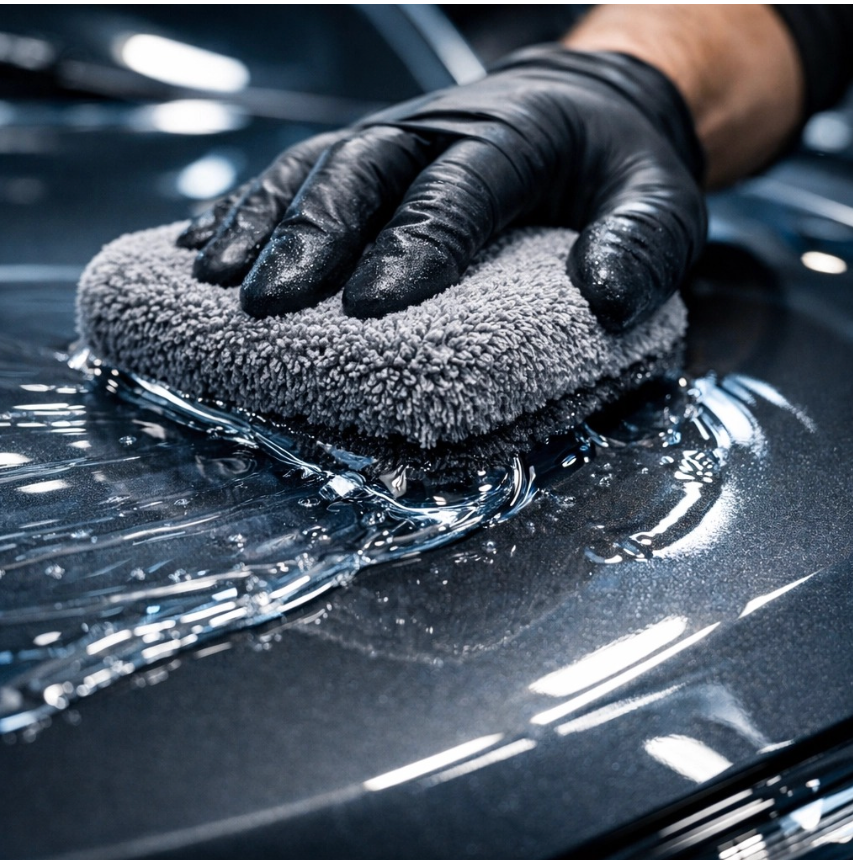
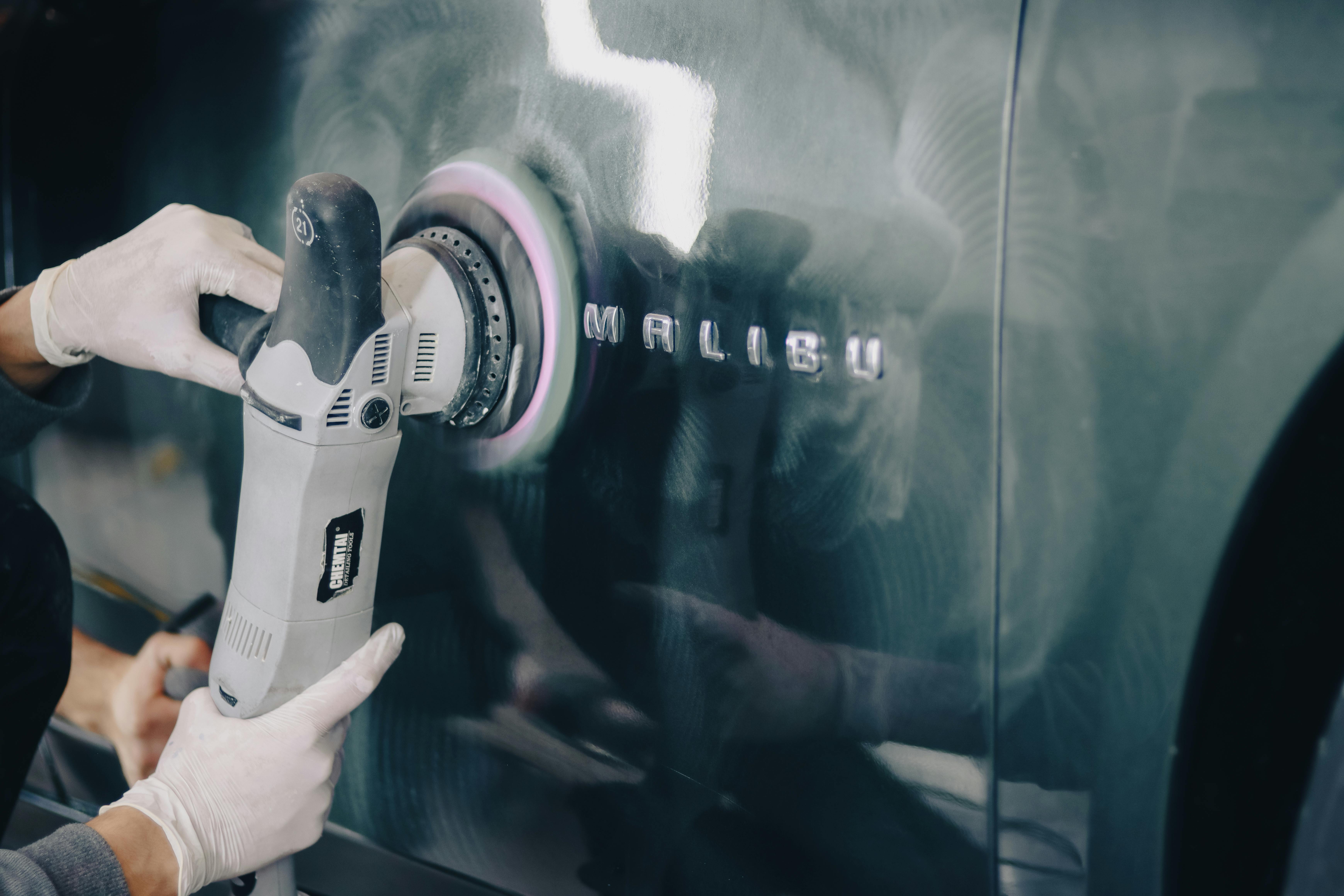
(AI Suggestion: A close-up shot of a professional detailer's hands using a specialized tool to hand-apply a thick, clear liquid film onto the hood of a luxury vehicle.)
How Does Manual Re-Leveling Fix Damage Without Replacing the Film?
The "secret" to Liquid PPF lies in its thermoplastic-like behavior and manual re-leveling capability. In traditional PPF, a rock chip creates a "scar" in the plastic that is permanent. If the look of the scar bothers you, you must peel off the entire piece and pay for a new installation. With LPPF, the material remains workable by a professional technician long after the initial cure. If a rock impact creates a visible blemish in the LPPF layer, we can perform a manual re-leveling process.
This process involves using specialized heat and leveling agents to "flow" the existing LPPF material back into the void created by the impact. Because the film was hand-applied and possesses high surface tension, we can essentially smooth out the blemish, restoring the flat, glossy surface without ever touching the factory paint. It is a regenerative approach to paint protection. Instead of a "one-and-done" film, you have a dynamic barrier that can be maintained and repaired as needed. This is a massive advantage for daily drivers in Pearland who don't want to spend $500 every time a pebble flies off a dump truck.
Do You Really Need to Pair LPPF with a Ceramic Coating?
While LPPF provides the physical "muscle" to stop rock chips, it works best when paired with a high-grade automotive ceramic coating. Think of LPPF as the armor and the ceramic coating as the low-friction shield. LPPF is thick and slightly softer to absorb impact, which can make it more prone to holding onto dirt or water spots. By applying a ceramic coating over the top of the LPPF, we add extreme hydrophobicity and chemical resistance.
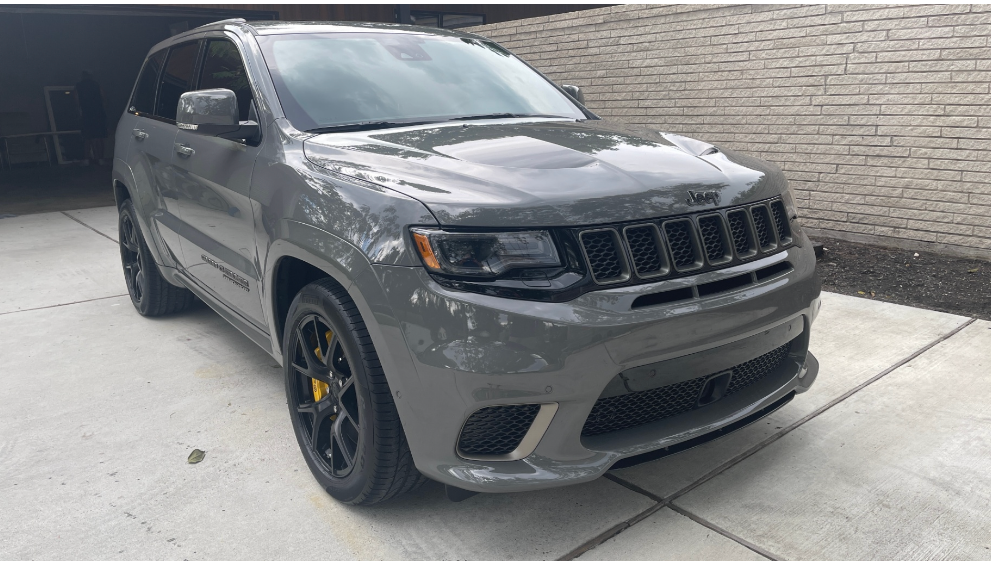
This combination is the gold standard for protection. The LPPF stops the rocks, and the ceramic coating ensures that bird droppings, tree sap, and Houston's industrial fallout slide right off. This dual-layer approach is featured in our platinum package, designed for owners who demand a "no-compromise" finish. When you see a gray Jeep SUV with a mirror-like reflection, you are often seeing the re-sult of this layered technology working in tandem.
Which Areas of Your Vehicle Benefit Most from Liquid PPF in Pearland?
Not every square inch of a car needs the heavy-duty impact protection of LPPF, though many enthusiasts opt for full-body coverage. For the average commuter, we recommend focusing on "high-strike" zones. These include the front bumper, hood, side mirrors, and the leading edges of the fenders. These are the areas most vulnerable to the sandblasting effect of highway driving.
In areas like South Houston, where road salt isn't the issue but road grime and construction debris are, protecting the lower rocker panels with LPPF is also a smart move. Because the product is hand-applied, we can feather the edges into the natural body lines of the vehicle, making the protection virtually invisible. Unlike traditional film, there are no unsightly "seams" that collect wax or dirt over time.
Can Manual Re-Leveling Save You Thousands Over the Life of Your Vehicle?
The cost-benefit analysis of LPPF becomes clear after the first year of ownership. Traditional PPF is an "all-or-nothing" investment; damage usually equals replacement. With LPPF and its manual re-leveling capability, the maintenance cost is significantly lower. Instead of replacing a $600 hood film, a quick trip
to our shop for a re-leveling session can restore the finish for a fraction of that cost.
Furthermore, LPPF preserves the original factory paint in a way that increases resale value. When it comes time to sell your vehicle in the competitive Houston market, having a documented history of LPPF application and maintenance shows buyers that the vehicle has been protected by an owner- operated facility with meticulous attention to detail. Whether it’s a luxury black sedan or a weekend sports car, the ability to repair the protection rather than replace it is a financial win.
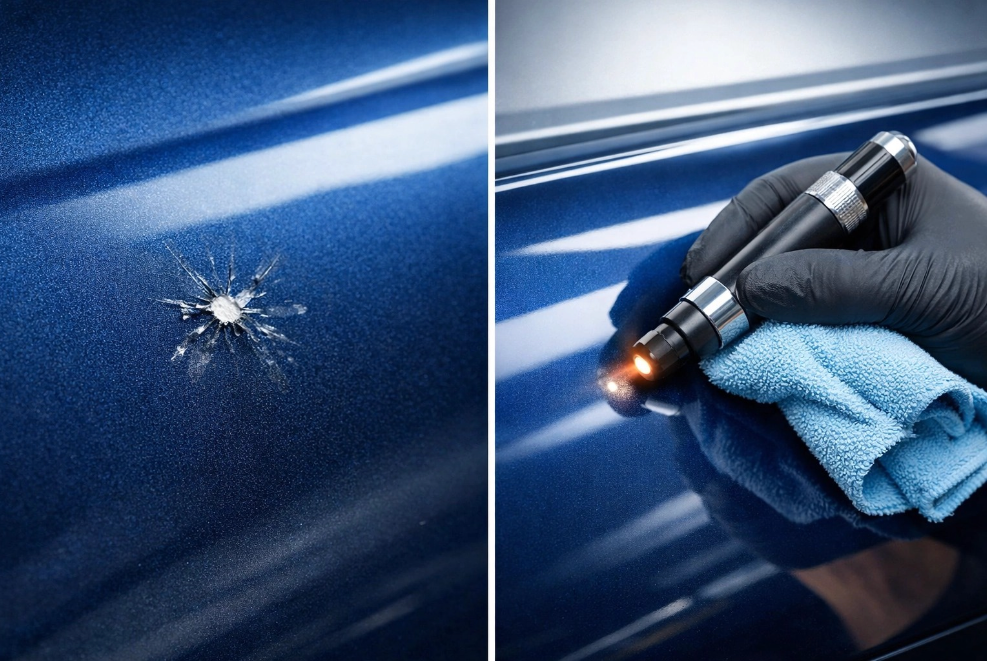
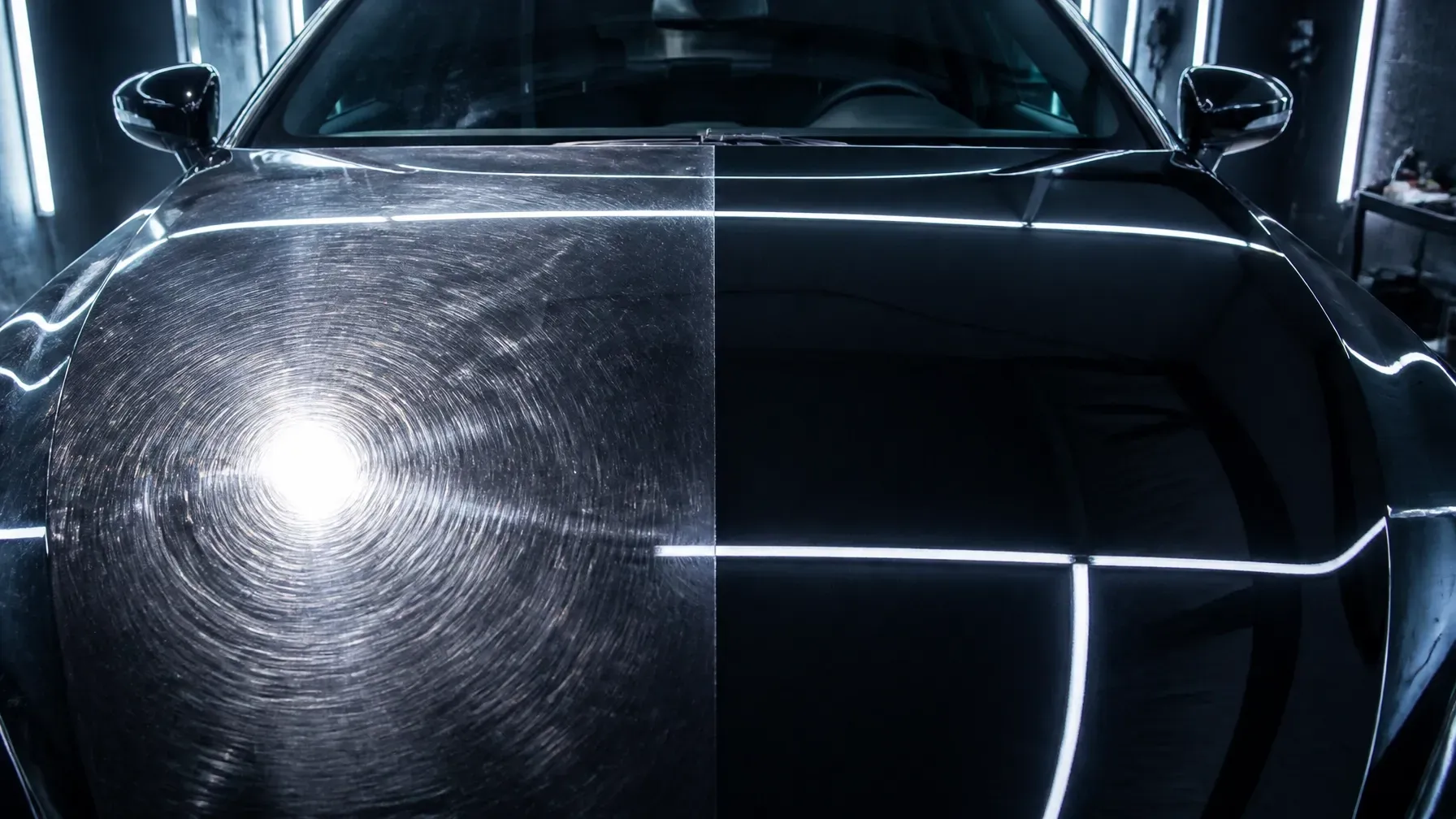
(AI Suggestion: A split-screen comparison showing a macro shot of a jagged rock chip in paint versus the same area after LPPF manual re-leveling, looking perfectly smooth.)
How Is the Hand-Applied Process Superior to Spray-On Alternatives?
There is a growing trend of "spray-on" paint protection, but these often lack the thickness and structural integrity of a hand-applied LPPF. Spraying a product often leads to "orange peel" textures or uneven coverage in recessed areas. Our hand-applied LPPF process ensures a uniform thickness across the entire panel. By manually working the material, we eliminate air pockets and ensure a high-bond strength that resists the high-pressure washes common in Pasadena.
We treat every vehicle with a one-car-at-a-time philosophy. This allows us to monitor the curing process of the LPPF and ensure that the leveling is perfect before the car ever leaves our shop. This meticulous approach is what separates Ceramic Enthusiasts from high-volume shops that prioritize speed over quality. We understand that your vehicle is a significant investment, and our goal is to provide a semi-permanent solution that stands up to the brutal Texas sun and road conditions.
Take the Next Step for Your Vehicle's Protection
If you are tired of discovering new rock chips every time you wash your car, it’s time to move beyond basic waxes and thin coatings. Liquid Paint Protection Film offers the robust defense you need with the unique advantage of manual re-leveling. This isn't just about shine; it's about structural integrity and long-term peace of mind.
To see if LPPF is the right fit for your vehicle, or to learn more about our exterior detailing and protection packages, reach out to us today. We are an owner operated business dedicated to providing the highest level of care for the Houston automotive community.
Connect with Ceramic Enthusiasts today at 281-626-9384 to schedule your consultation and keep your finish flawless for years to come.
You might also like
Ceramic Enthusiasts