

This is a subtitle for your new post
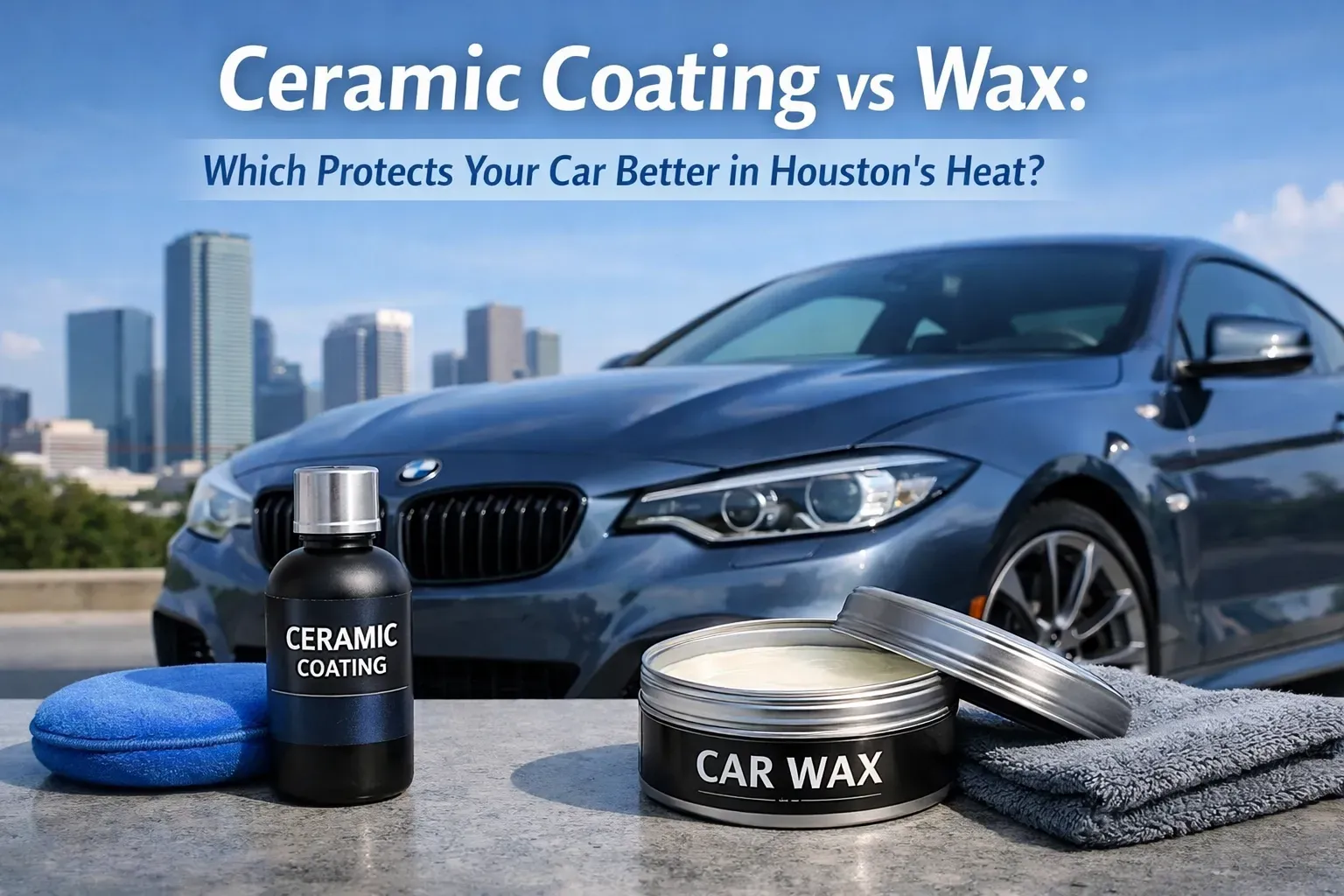
If you're searching "ceramic coating vs wax" in Houston, you already know our summers aren't playing around. When temperatures hit 95+ degrees and the UV index climbs into dangerous territory, your car's paint faces a daily assault that traditional wax simply wasn't designed to handle. The question isn't whether you need protection: it's which type actually stands up to Texas heat without melting into a sticky mess on your hood.
After over a decade detailing vehicles one car at a time across Houston, Pearland, and League City, I've seen firsthand what happens when wax meets our climate. Spoiler: it doesn't end well.
What's the Real Difference Between Ceramic Coating and Wax?
Traditional wax sits on top of your paint like a temporary shield. It's a blend of natural carnauba wax or synthetic polymers that provide shine and some water beading: for a while. The molecular structure remains on the surface without bonding to the clear coat, which is why it washes away relatively quickly.
Ceramic coating works fundamentally differently. It creates a semi-permanent chemical bond with your vehicle's clear coat at the molecular level. This isn't a layer sitting on top: it's a protective shell that becomes part of your paint's surface. The coating is made from silicon dioxide (SiO2) or titanium dioxide (TiO2), which forms a hard, glass-like barrier when it cures.
The implications matter for Houston drivers. A bonded layer doesn't melt, slide, or wash off when you're stuck in traffic on I-45 under direct sunlight. Wax does.
How Does Houston's Heat Actually Destroy Traditional Wax?
Wax begins softening at temperatures around 150-160 degrees. Your paint surface easily reaches those temperatures during summer afternoons when the sun beats down on parked vehicles. Once wax softens, it attracts dust, pollen, and contaminants that embed into the sticky surface. Instead of protecting your paint, it becomes a magnet for the exact particles that cause scratches and swirl marks.
The breakdown accelerates with every washing. That "beading" you see after a fresh wax job? Gone within 4-6 weeks in Houston's climate. You're reapplying wax every 1-3 months just to maintain basic protection. Over a year, that's 4-12 applications. Over five years? You're looking at 20-60 wax jobs.
Houston's humidity compounds the problem. Moisture sits on wax longer because traditional formulas don't offer the extreme hydrophobic properties ceramic coatings deliver. Water spotting becomes inevitable, especially if you park near the refineries or shipping corridors where industrial fallout mixes with rain.
Why Does Ceramic Coating Handle Texas Weather Better?
Ceramic coating blocks 90-95% of UV rays versus wax's approximate 50% protection. In practical terms, that difference prevents oxidation, fading, and clear coat degradation that leaves your paint looking chalky and dull. The coating's molecular structure reflects UV radiation before it penetrates to the paint layer underneath.
The hydrophobic effect creates surface tension so high that water, mud, and road grime slide off with minimal effort. After Houston thunderstorms, you'll notice the difference immediately: your ceramic-coated vehicle air-dries cleaner than waxed cars that retain water spots and streaks. This isn't just aesthetic; it's functional protection against the acidic compounds in our rain that etch unprotected clear coats.
Chemical resistance stands at 100% with quality ceramic coatings. Bird droppings, tree sap, brake dust, and industrial fallout: all the contaminants Houston drivers battle daily: can't penetrate the coating's barrier. These substances sit on the surface without bonding or etching. With wax, they embed and cause permanent damage within hours if left untreated.
The coating lasts 2-5 years depending on maintenance and product grade. Our owner-operated approach means we apply premium-grade ceramic that stands up to dozens of weather cycles without degrading. You protect your vehicle once and maintain that protection for years, not months.
Which Option Actually Saves You Time and Money?
The upfront cost difference seems significant. Wax application runs $50-150 depending on your vehicle size and product quality. Ceramic coating requires substantially more investment: but the math tells a different story over time.
Apply wax every two months at $100 per application. Over five years, you spend $3,000 on wax jobs alone. That doesn't account for the 20-40 hours you spend applying it yourself or driving to detail shops for reapplication. Ceramic coating pays for itself while delivering superior protection throughout that entire period.
The maintenance time difference matters for busy Houston commuters. Ceramic-coated vehicles require simple pH-neutral washing every 2-3 weeks. No clay bar treatments every month. No spending Saturday afternoons in your driveway with orbital polishers. The coating does the protective work continuously without your intervention.
Auto detailing Houston services see dramatic reduction in correction work needed on ceramic-coated vehicles compared to wax-protected ones. When you bring your car in for maintenance, there's less contamination to remove, fewer swirls to polish out, and the paint underneath remains in near-original condition.
Can Ceramic Coating Really Handle Daily Driving in Houston?
Absolutely. Vehicles exposed to harsh conditions with intense UV benefit most from ceramic coating's protection. Our one-car-at-a-time approach means we properly prepare every surface before coating application. That includes paint correction to remove existing defects, decontamination to eliminate embedded particles, and surface leveling to ensure proper bonding.
The coating performs under the specific conditions Houston presents. Morning commutes through humidity. Midday parking in direct sunlight. Evening drives when industrial fallout settles across the metro area. Stop-and-go traffic where brake dust coats your wheels and lower panels. Highway speeds on I-10 or 610 where road debris impacts your front end.
Each scenario tests your paint protection differently. Ceramic coating remains chemically stable through all of them. It doesn't soften, melt, or degrade. The molecular bond stays intact whether your vehicle sits in a Pearland driveway or fights traffic on the Ship Channel Bridge.
For vehicles kept outdoors, the protection becomes essential. UV exposure accumulates daily without reprieve. Ceramic coating prevents the oxidation that turns red paint pink, black paint gray, and clear coats milky. The investment preserves both appearance and resale value for years beyond what wax can offer.
What Should Houston Drivers Choose Between Wax and Ceramic?
If you plan to keep your vehicle longer than two years, ceramic coating delivers superior value. The durability, UV protection, chemical resistance, and time savings outweigh the upfront cost difference. For Houston's climate specifically, wax struggles to maintain effectiveness between the heat, humidity, and environmental contaminants we face year-round.
Professional application matters significantly. Our owner-operated business brings over 10 years of experience to every ceramic coating job. We work on one vehicle at a time, ensuring meticulous surface preparation and proper curing conditions. The coating only performs as well as the prep work allows: rushed applications on contaminated surfaces fail within months.
Houston drivers searching for "ceramic coating near me" need to understand what separates quality ceramic work from quick applications. Ask about surface preparation processes. Confirm curing times. Verify product warranties. The coating should last years, not months.
Ready to protect your vehicle with ceramic coating that handles Houston heat? Connect with us to schedule a consultation and see whether ceramic coating fits your specific vehicle and driving conditions. We'll walk through the process, explain realistic expectations, and determine the best protection strategy for your car. Call us directly or explore our automotive ceramic coating services to learn more about what we offer across Houston, Pearland, Pasadena, and surrounding areas.