
Looking For Ceramic Coating Near Me? Here Are 10 Things You Should Know Before Booking
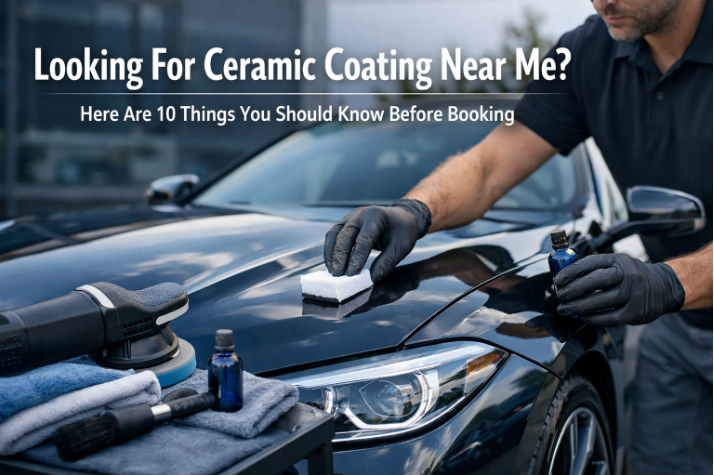
Searching "ceramic coating near me" in Houston, Pearland, or League City brings up dozens of options. Not all ceramic coating services deliver the same results. Before you book, understand what separates a quality application from a quick wax-and-go job that fails within months.
What Exactly Is Ceramic Coating and How Does It Work?
Ceramic coating is a liquid polymer that chemically bonds with your vehicle's factory paint. Unlike wax that sits on the surface and washes away after a few weeks, ceramic coating creates a semi-permanent protective layer at the molecular level. This bond forms a hydrophobic surface that repels water, dirt, and contaminants while resisting UV damage and minor scratches.
The coating contains nano-ceramic particles suspended in a resin carrier. When applied correctly and cured, these particles cross-link with the paint's clear coat to form a durable shield. Think of it as adding a second clear coat that's engineered specifically to withstand environmental assault.
In Houston's climate: where summer temperatures routinely hit 95 degrees and humidity hovers near saturation: this protection stands between your paint and accelerated oxidation, bird droppings that etch within hours, and industrial fallout from refineries and shipping corridors.
How Long Does Ceramic Coating Last in Houston's Heat and Humidity?
Premium ceramic coatings last 3 to 5 years with proper maintenance. That timeline holds true even in Houston's punishing conditions, provided the coating was applied correctly and you follow basic care protocols.
The longevity depends on three factors: coating quality, application precision, and maintenance consistency. Cheap coatings or rushed applications fail within 12-18 months. Professional-grade products applied by experienced technicians deliver the full lifespan: dozens of weather cycles, countless rainstorms, and years of UV exposure without degrading.
Houston's heat and humidity actually test coating durability more aggressively than milder climates. The constant temperature swings between air-conditioned garages and scorching parking lots stress the bond. High humidity accelerates any existing application flaws. A coating that survives here proves its quality.
Do I Need Paint Correction Before Ceramic Coating?
Yes. Ceramic coating locks in whatever condition exists on your paint surface. Apply it over swirl marks, scratches, or oxidation, and you've just sealed those imperfections under a glossy protective layer.
Paint correction removes surface defects through a multi-step process of clay treatment, compounding, and polishing. This creates the flawless foundation ceramic coating needs to deliver that mirror-like finish everyone expects. Skip this step, and you're paying premium prices to protect damaged paint.
For vehicles with minor imperfections, single-stage correction suffices. Heavily weathered paint or cars with significant swirls require multi-stage paint correction Houston detailers perform before coating. An owner-operated shop takes the time to assess your specific paint condition and recommend the appropriate correction level rather than rushing every car through the same quick process.
What Makes a Ceramic Coating Provider Worth Trusting?
Experience separates adequate results from exceptional outcomes. Over 10 years in the industry means a technician has seen every paint type, condition, and environmental challenge Houston throws at vehicles. They've learned what works, what fails, and how to adjust technique for optimal bonding.
Look for these credibility markers:
Owner-operated businesses where the person quoting your job performs the work. No handoffs to untrained assistants who might rush the prep or application.
One-car-at-a-time approach that ensures meticulous attention to your vehicle rather than assembly-line processing. Proper ceramic coating application takes 8-12 hours for preparation, correction, application, and curing. Anyone promising same-day service is cutting corners.
Product selection tailored to Houston conditions. Not all ceramic coatings perform equally in extreme heat and humidity. Ask which products they use and why those formulations suit Texas weather.
Portfolio of actual work showing before-and-after results from local vehicles. Generic stock photos mean nothing.
Can Ceramic Coating Really Handle Houston's Heat and Humidity?
Absolutely. Premium ceramic coatings are engineered to withstand UV exposure that would destroy unprotected clear coat in months. The nano-ceramic particles reflect UV radiation rather than absorbing it, preventing oxidation and fading.
Houston's humidity creates constant water exposure: morning dew, afternoon thunderstorms, high ambient moisture. The hydrophobic properties of ceramic coating repel this water before it can penetrate and cause damage. Beads form and roll off, taking dirt and contaminants with them.
Industrial fallout from refineries and shipping activity settles on vehicles daily in Houston, Pearland, and surrounding areas. Ceramic coating's smooth, non-porous surface prevents these contaminants from bonding to the paint. They rinse away instead of etching into the clear coat.
The heat itself poses no threat to properly cured ceramic coating. These products are designed to handle temperatures far exceeding what Texas summers produce.
Which Surfaces Should Get Ceramic Coating?
Paint is the obvious answer, but ceramic coating services extend protection to every exterior surface that faces environmental assault.
Glass ceramic coating transforms windshields and windows into hydrophobic surfaces where rain beads and slides off at highway speeds. Visibility during Houston's sudden thunderstorms improves dramatically. You'll notice the difference from the first rainstorm.
Wheel ceramic coating protects against brake dust, road grime, and the corrosive salt residue from coastal proximity. Cleaning becomes significantly easier: most contaminants rinse away with plain water.
Consider the complete package for comprehensive protection. When every surface repels water and resists contamination, your entire vehicle stays cleaner longer and requires less aggressive washing that can damage protective layers over time.
What's the Difference Between DIY and Professional Ceramic Coating?
DIY ceramic coating products available at auto parts stores contain lower concentrations of active ceramic particles and simpler resin carriers. They're easier to apply but deliver 6-12 months of protection at best. Application errors: streaking, high spots, improper curing: happen frequently and can't be corrected without stripping and restarting.
Professional-grade coatings used by certified technicians offer significantly higher durability through more advanced chemistry. These products require precise surface preparation, controlled application in specific temperature and humidity ranges, and proper curing time. Get any step wrong and the coating fails prematurely.
The real difference shows up in Houston's environment. Consumer products might survive a Minnesota winter, but Houston's combination of heat, humidity, UV exposure, and industrial contamination overwhelms their limited protective capacity within months. Professional coatings are formulated to handle exactly these conditions for years.
How Much Maintenance Does Ceramic Coating Require?
Ceramic coating dramatically reduces maintenance but doesn't eliminate it entirely. The hydrophobic surface means dirt and grime have difficulty bonding, so you'll wash less frequently and with less effort.
Use pH-neutral car wash soap: harsh chemicals can degrade the coating over time. Avoid automatic car washes with stiff brushes that create micro-marring. Hand washing or touchless washes preserve the coating's integrity.
Most ceramic coatings benefit from a booster spray applied every 3-6 months. These products refresh the hydrophobic properties and add a layer of sacrificial protection. This simple step extends the coating's lifespan and maintains peak performance.
Annual inspections catch any areas where the coating may have worn thin from rock chips or excessive abrasion. Early attention to these spots prevents them from expanding and compromising larger sections.
What Should I Expect During the Application Process?
Quality ceramic coating application follows a methodical process that takes time. Expect your vehicle to be out of commission for 24-48 hours minimum: rushing the cure compromises the molecular bond.
The process starts with thorough decontamination using clay treatment to remove embedded particles. Next comes paint correction to eliminate any surface imperfections. The technician then performs a final wipe-down with isopropyl alcohol to remove any oils or residue that would interfere with bonding.
Application happens in controlled conditions: specific temperature and humidity ranges ensure proper flash time and curing. The coating goes on in thin, even layers using specialized applicators. Each section receives careful inspection under high-intensity lighting to catch any high spots or streaking before they cure.
After application, the coating needs 12-24 hours to cure before the vehicle can be exposed to water. Full cure takes 7 days, during which you should avoid washing or exposing the vehicle to extreme conditions.
How Do I Know If Ceramic Coating Is Worth the Investment?
Compare the cost of ceramic coating against the alternatives. Traditional wax requires reapplication every 4-6 weeks. Over a 5-year period, you'll spend comparable money on repeated wax applications plus the time investment: and still have inferior protection.
Ceramic coating preserves your vehicle's paint condition, which directly impacts resale value. A 5-year-old vehicle with pristine paint commands significantly higher prices than one with faded, oxidized, or scratched clear coat. The protection pays for itself at trade-in or sale.
For vehicles parked outdoors in Houston, Pearland, or League City: where UV exposure is relentless and industrial fallout is constant: ceramic coating is the difference between maintaining showroom appearance and watching your paint deteriorate year by year.
Consider your goals. Want to keep your vehicle looking new for years with minimal effort? Ceramic coating delivers. Looking for the cheapest possible option regardless of results? Traditional wax costs less upfront but fails to protect adequately in Houston's environment.
Ready to protect your investment with professional ceramic coating in Houston? Schedule a consultation to discuss your vehicle's specific needs and get a detailed quote. Over a decade of experience working on Houston vehicles means you're getting proven expertise, not trial-and-error learning. Connect with Ceramic Enthusiasts to determine if ceramic coating fits your protection needs.