
Your Houston Interior Detailing Guide: How to Beat Mildew, Odors & Heat Damage in 2026
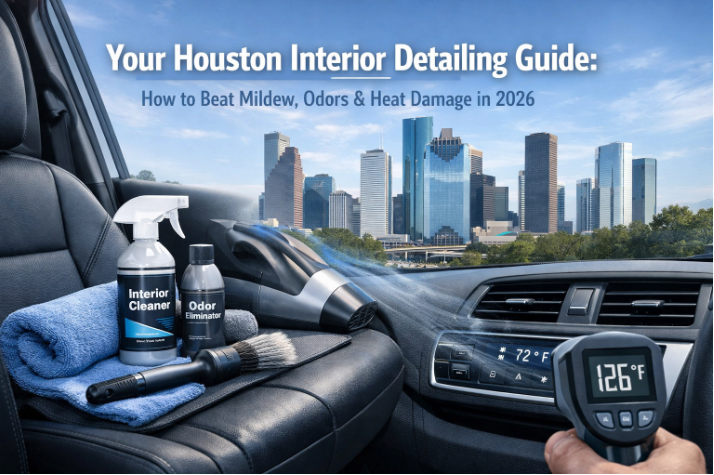
Houston's climate doesn't just test your patience during summer: it actively destroys your car's interior. The combination of 95-degree heat, Gulf Coast humidity hovering around 75%, and relentless UV exposure creates the perfect storm for cracked dashboards, musty odors, and mildew growth that standard cleaning can't touch. Professional interior detailing addresses these specific challenges with deep cleaning techniques, protective treatments, and disinfection processes designed for our unique environment.
Between refinery air quality in Pasadena, coastal moisture in League City, and stop-and-go traffic throughout Houston's freeway corridors, your vehicle's interior faces accelerated deterioration every single day.
Why Does Houston's Climate Attack Your Car's Interior?
Houston's weather creates three distinct threats to your interior surfaces. The heat problem starts when your dashboard reaches 140-160 degrees on a typical summer afternoon: hot enough to warp plastic, crack vinyl, and fade leather to a dull, chalky finish. UV rays penetrate through your windows and break down the molecular structure of upholstery, causing permanent color loss that worsening with each exposure cycle.
Humidity is the second assault. Our 75% average humidity means moisture settles into every fabric surface, carpet fiber, and door panel crevice. This standing moisture doesn't evaporate quickly in enclosed spaces, creating breeding grounds for bacteria and mold spores. The smell you notice after your car sits closed for a few days? That's active microbial growth feeding on trapped moisture and organic material.
The third factor is airborne contamination. Houston's industrial corridor pumps fine particulates, pollen, and chemical residues into the air. These particles infiltrate your cabin through HVAC systems and settle on every surface. Mixed with humidity, they form a grimy film that bonds to leather, fabric, and plastic surfaces: the kind of buildup that water and shop towels can't remove.
How Does Mildew Take Over in Houston Humidity?
Mildew starts in the places you can't see. Air conditioning condensation drips into floor mat channels. Rain tracked in on shoes soaks into carpet padding. Coffee spills seep into seat cushions. In Houston's humid environment, these moisture pockets never fully dry: they just sit there, creating perfect conditions for fungal growth.
Within 24-48 hours, mold spores that naturally exist in the air begin colonizing these damp areas. You'll smell it before you see it. That musty, earthy odor coming from your vents signals active mildew growth in your HVAC system. The black spots appearing on rubber door seals and fabric headliners are visible colonies spreading across surfaces.
Regular vacuuming doesn't address this because the problem lives beneath the surface layer. The spores embed in carpet fibers, upholstery weave, and the porous materials behind your door panels. Without proper extraction equipment and antimicrobial treatments, you're just moving surface dirt around while the actual contamination multiplies underneath.
Professional interior detailing tackles mildew through extraction cleaning that pulls moisture and contaminants from deep within materials. Steam cleaning raises temperatures high enough to kill active colonies. Disinfection treatments eliminate spores and prevent regrowth. The process doesn't just mask odors with air fresheners: it removes the biological source creating them.
What Does Heat Damage Actually Look Like?
Dashboard cracking appears first along stress points where sunlight hits directly. The plastic becomes brittle, losing its flexibility. Small hairline cracks appear, then expand into deep fissures that can't be repaired. Once cracking starts, it accelerates: each heat cycle makes it worse.
Leather seats show heat damage through color fading and surface drying. The material loses its natural oils, becoming stiff and prone to cracking along seams and creases. What started as supple, rich leather transforms into a dull, papery surface that cracks when you sit down. This process happens faster in Houston than almost anywhere else because our summer lasts eight months, subjecting interiors to thousands of high-temperature cycles annually.
Fabric seats fade unevenly. Areas exposed to direct sunlight bleach out while shaded sections maintain original color, creating a patchwork appearance. The fabric itself weakens: UV exposure breaks down synthetic fibers, causing seats to feel rough and develop thin spots where friction occurs.
Vinyl surfaces on door panels and center consoles develop a sticky residue as plasticizers break down under heat stress. The material contracts and pulls away from mounting points. Colors shift from their original shade to an oxidized, grayish tone that screams "sun damage" to anyone who looks at your interior.
How Does Professional Interior Detailing Address These Problems?
Professional detailing starts with complete disinfection using an ozone machine. This will eliminate bacteria, mold spores, and the microorganisms producing odors in your carpet and upholstery. The disinfection process treats not just visible surfaces but also air vents, cup holders, and door jambs where contamination hides.
Deep extraction cleaning follows. Commercial-grade equipment injects hot cleaning solution into carpet and fabric, then immediately extracts it along with embedded dirt, moisture, and contaminants. This process reaches depths that home carpet cleaners can't achieve: pulling out years of accumulated grime that has bonded to fibers.
Leather receives specialized conditioning treatments that restore natural oils and create protective barriers against UV damage. These conditioners penetrate the leather's surface, rehydrating dried-out material and creating flexibility that prevents cracking. The treatment leaves a semi-matte finish that doesn't attract dust while blocking future heat damage.
For plastic and vinyl surfaces, protectants with UV inhibitors create a shield that deflects sunlight and prevents the oxidation causing fading and brittleness. These aren't the greasy sprays from auto parts stores: professional-grade protectants bond to surfaces and maintain effectiveness through dozens of weather cycles.
Odor elimination uses enzymatic treatments that break down organic compounds causing smells rather than covering them with fragrance. The enzymes literally digest the odor sources, permanently removing them instead of temporarily masking the problem.
What's Included in a Complete Interior Detail?
A comprehensive interior detail covers every surface inside your vehicle. The process begins with an ozone treatment to completely removal odors trapped in the vents to the seats, and carpets. Then the floor mats, which receive individual cleaning and disinfection. Carpets undergo hot water extraction that pulls embedded dirt from the padding layer beneath the visible surface.
Seats get sectioned treatment based on material type. Fabric seats receive extraction cleaning followed by fabric protection that helps repel future stains and UV damage. Leather seats are cleaned with pH-balanced solutions, then conditioned and protected. The process addresses seat backs, bases, and the often-overlooked areas where the seat meets the center console.
Dashboard and console cleaning removes the film that builds up from off-gassing plastics, skin oils, and airborne contaminants. Vents receive individual attention: compressed air blows out accumulated dust, followed by detail brushes that clean each slat. This addresses the musty smell that comes from contaminated HVAC systems.
Door panels, including jambs and weather stripping, get thorough cleaning and protection. These areas collect dirt every time you enter the vehicle and are major sources of mildew growth in Houston's humid climate. Windows receive interior cleaning that removes film and improves visibility: especially important for nighttime driving when that haze creates dangerous glare.
The headliner, often neglected during regular cleaning, receives gentle treatment that removes stains and disinfects the fabric without causing sagging or water spots. Center console storage areas are emptied, cleaned, and organized. Even the smallest details: like cleaning air freshener vents and charging ports: receive attention during a professional detail.
How Often Should Houston Drivers Detail Their Interiors?
Houston's climate demands interior detailing every 3-6 months to prevent permanent damage. Vehicles parked outdoors need service closer to the 3-month mark due to constant UV exposure and faster contamination accumulation. Garage-kept vehicles can extend to 4-6 months, but humidity still penetrates and creates mildew risks.
Commercial vehicles and daily commuters benefit from quarterly detailing schedules. The higher usage means more moisture intrusion from wet shoes, spilled drinks, and frequent door openings that let humidity inside. Rideshare drivers should detail monthly given the constant passenger turnover and higher contamination exposure.
Between professional detailing sessions, weekly vacuuming and monthly wipe-downs help maintain results. Use microfiber cloths slightly dampened with water for dash and console cleaning: avoid harsh chemicals that strip protective treatments. Address spills immediately before they soak into upholstery. Run your AC on recirculate during high-humidity days to reduce moisture infiltration.
Signs you need immediate detailing include persistent odors that don't disappear after airing out your car, visible mildew spots on any surface, sticky residue on leather or vinyl, or noticeably faded upholstery color. These indicate active damage that worsens daily until properly addressed.
The owner-operated approach means meticulous attention to every vehicle. Each car receives one-at-a-time treatment rather than assembly-line processing. Over a decade of experience working specifically with Houston's climate challenges ensures your interior receives treatments proven to withstand our unique environmental stresses.
Professional interior detailing isn't just about appearance: it's about protecting your investment from Houston's aggressive climate. The combination of heat, humidity, and contamination creates damage that reduces resale value and creates health concerns from mold exposure. Regular professional treatment prevents these problems while keeping your interior comfortable and fresh-smelling regardless of what Houston's weather throws at it.ds
Ready to protect your interior from Houston's climate? Connect with us at (281 626-9384 to schedule your interior detailing service and see how professional treatment handles mildew, odors, and heat damage that DIY methods can't touch.