
Ceramic Coating vs. Wax: Which Is Better for Your Houston Daily Driver?
This is a subtitle for your new post
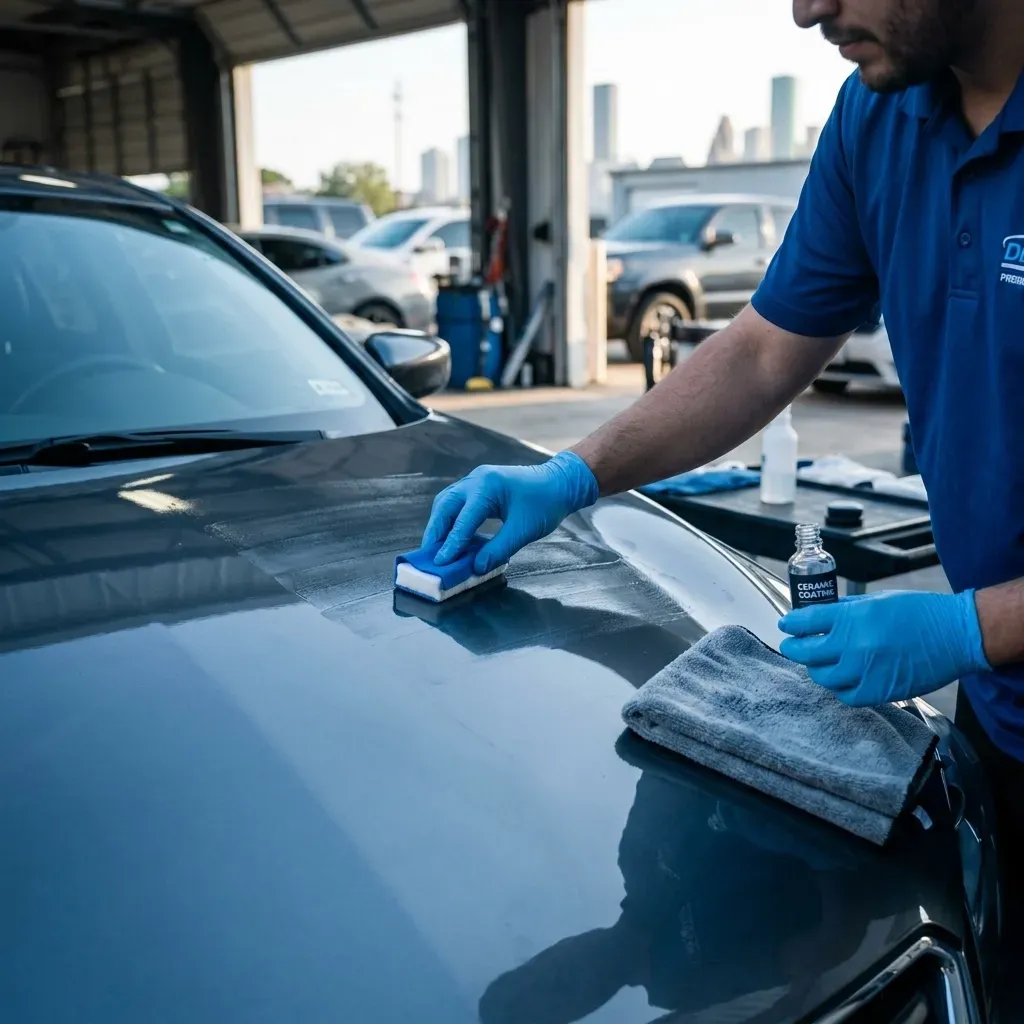
Houston is not kind to car paint. Between the relentless Gulf Coast humidity and the 100-degree summer afternoons, your daily driver takes a beating every single time you pull out of the garage in Pearland or League City. For decades, the go-to solution for protection was a high-quality carnauba wax. However, as automotive technology has evolved, professional ceramic coatings have emerged as the superior choice for anyone living in the Greater Houston area. Choosing between the two isn't just about shine; it’s about how much time and money you want to spend maintaining your vehicle over the next five years.
Why does the Houston climate destroy traditional car wax so quickly?
Traditional car wax is essentially a sacrificial layer made of natural oils and waxes. While it provides a deep, warm glow that looks fantastic for a Saturday morning car show, it begins to degrade the moment the temperature hits 90 degrees. In Houston, we hit those temperatures before lunchtime for six months out of the year. When your car's surface temperature reaches 120 or 150 degrees while sitting in a parking lot in Sugar Land, the wax literally begins to melt and evaporate off the paint.
Beyond the heat, the humidity plays a massive role. Moisture trapped against a waxed surface can lead to premature oxidation, especially if the wax layer has already begun to thin out. Traditional wax typically lasts about four to eight weeks in a mild climate. In the harsh Texas sun, you’re lucky to get thirty days of real protection before the hydrophobic properties vanish and your paint is exposed to UV rays and bird droppings. Without a durable barrier, the clear coat on your daily driver will eventually cloud, fade, and fail.
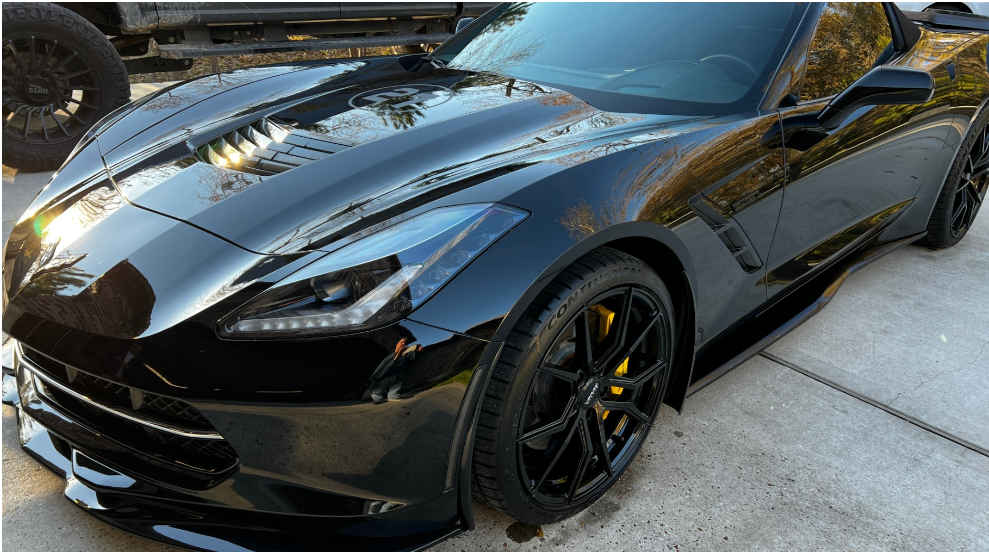
How does ceramic coating provide superior protection for Pearland and League City drivers?
Professional ceramic coating is a different animal entirely. Unlike wax, which sits on top of the paint, a ceramic coating is a semi-permanent bond of Silicon Dioxide (SiO2) that creates a hard, glass-like shield. This bond happens at a molecular level, filling in the microscopic pores of your clear coat. Once it cures, it doesn't melt, wash off, or wear away with a few rainstorms. It is engineered to withstand extreme heat, making it the perfect defense against the Texas sun.
For residents in League City or Friendswood, this means your car stays protected for years, not weeks. The coating provides a high level of UV resistance, preventing the sun from bleaching the pigment in your paint. It also offers a much higher contact angle for water, meaning rain and road grime from I-45 simply bead up and roll off. This hydrophobic effect doesn't just look cool: it prevents mineral deposits and water spots from etching into your finish, which is a constant battle in our humid environment.
What are the main differences between automotive wax and professional ceramic coatings?
The primary differences come down to durability, chemistry, and maintenance. Wax is an organic product that provides a temporary barrier. Ceramic coating is an inorganic, synthetic liquid polymer that hardens into a solid layer. While wax is relatively easy for a hobbyist to apply, it offers zero resistance to chemicals or light abrasions. If you take a waxed car through a standard touchless car wash in Pasadena, the harsh alkaline soaps will likely strip the wax right off.
A professional ceramic coating, however, is chemical resistant. It can withstand the pH-heavy detergents found in many commercial washes without degrading. In terms of longevity, a single professional application can last anywhere from two to five years, depending on the specific package you choose. To get that same level of protection from wax, you would need to reapply the product at least 24 to 60 times over that same period.
| Feature | Traditional Wax | Professional Ceramic Coating |
|---|---|---|
| Durability | 1 - 2 Months | 5+ Years - Permanent |
| Heat Resistance | Low (Melts at high temps) | Excellent (Withstands extreme heat) |
| UV Protection | Minimal | High |
| Maintenance | High (Frequent reapplication) | Low (Easy washing) |
| Chemical Resistance | Poor | Excellent |
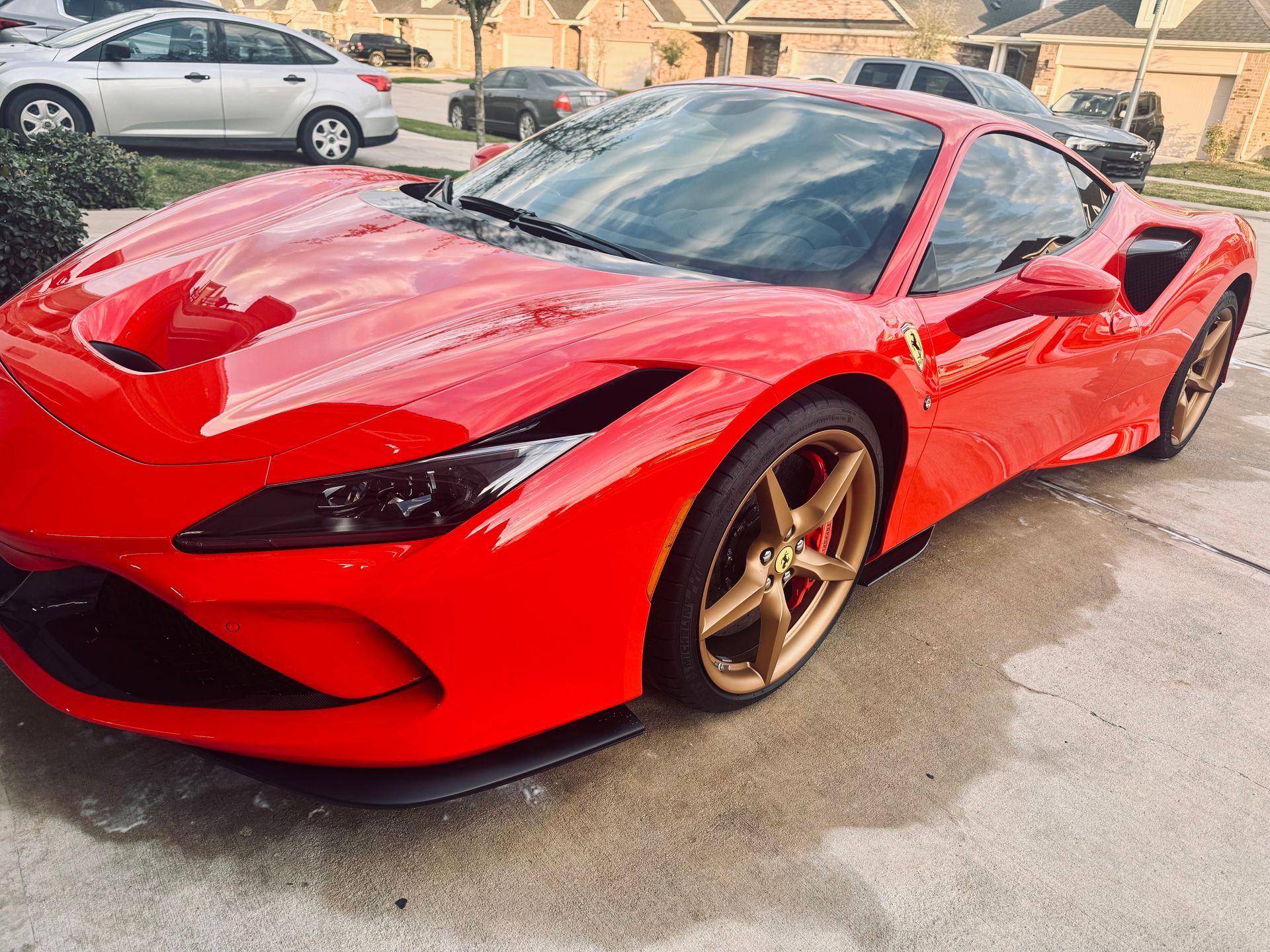
Which option is more cost-effective for a long-term daily driver in Houston?
At first glance, a tub of wax from a local auto parts store in Baytown seems much cheaper than a professional ceramic service. However, when you factor in the value of your time and the cost of maintenance products, the math shifts quickly. For a daily driver that you plan on keeping for three or more years, ceramic coating is almost always the more economical choice.
Think about the "5-year cost." With wax, you are spending hours every month washing, prepping, and reapplying the product. If you value your time at even a modest hourly rate, you’re spending thousands of dollars in "labor" over five years just to keep the car looking decent. With a ceramic coating, the upfront investment covers the deep paint correction and the application itself. After that, your weekly maintenance drops to a simple 20-minute wash. The car stays cleaner for longer, and the resale value remains significantly higher because the paint is preserved in showroom condition.
Can you describe the hands-on application process at Ceramic Enthusiasts?
At Ceramic Enthusiasts, we believe in a meticulous, owner-operated approach. We have over a decade of experience and treat every vehicle with a one-car-at-a-time focus. We don't use "spray-and-rinse" shortcuts. Our application process is entirely hands-on, ensuring that every square inch of your vehicle’s surface is perfectly covered.
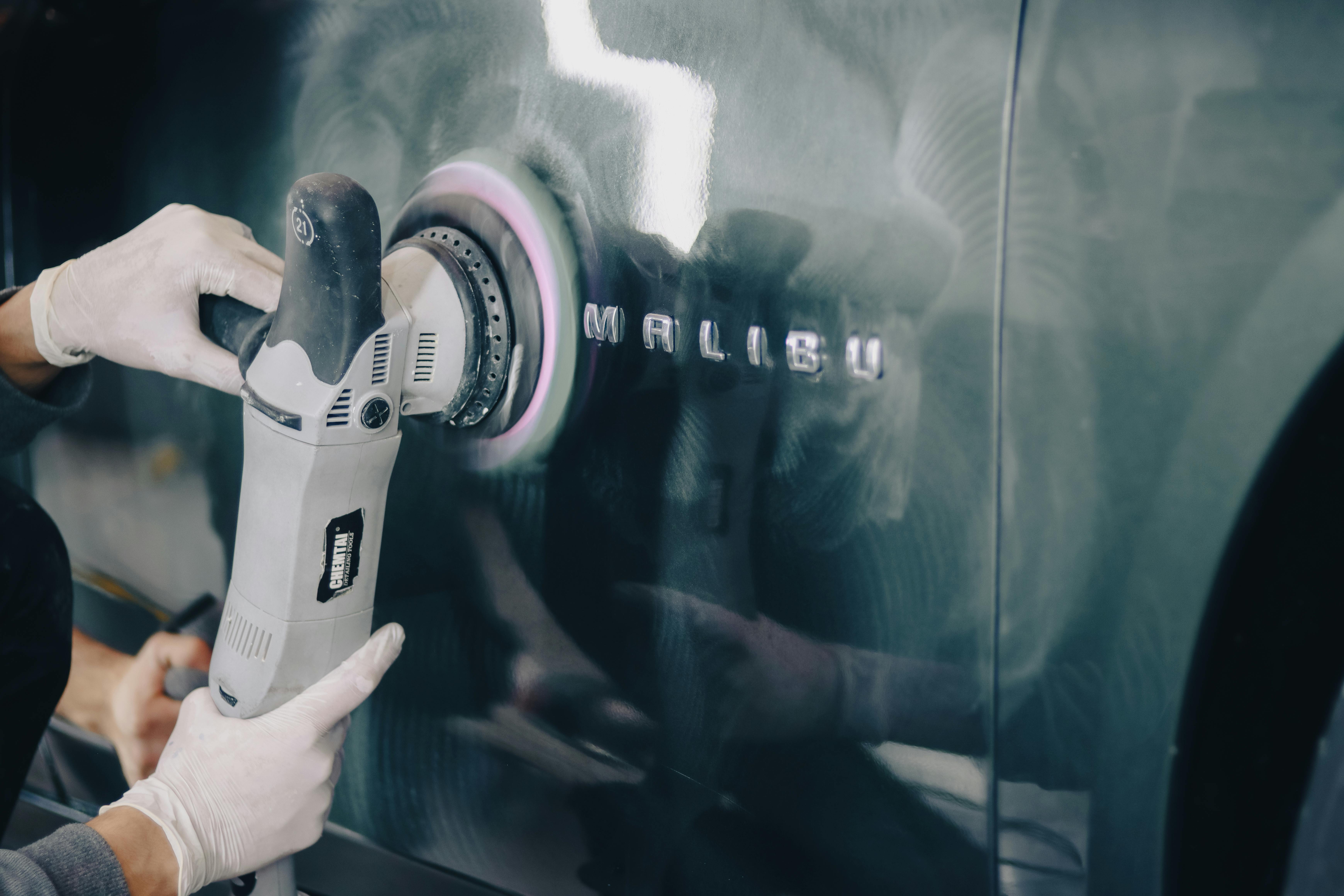
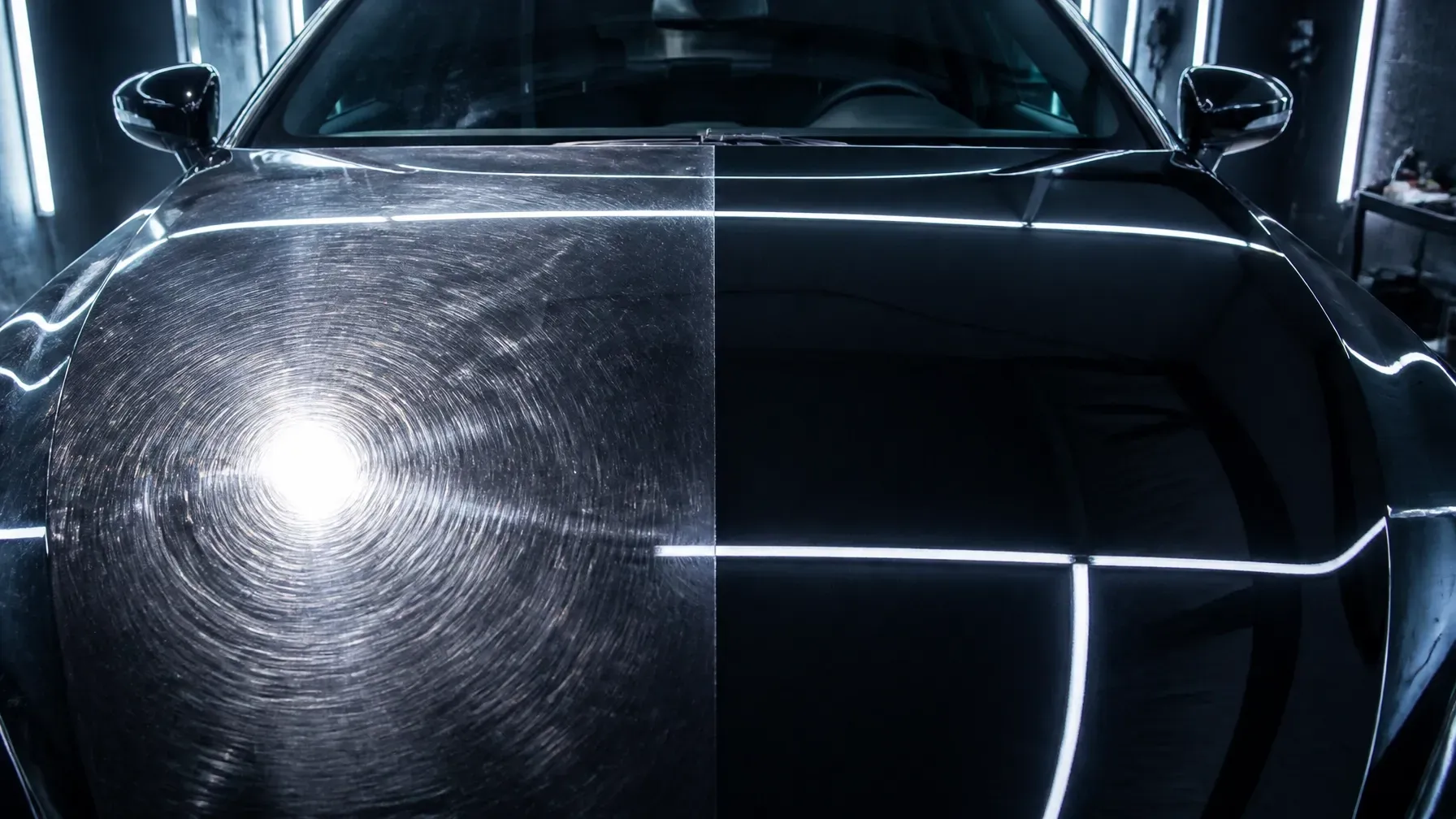
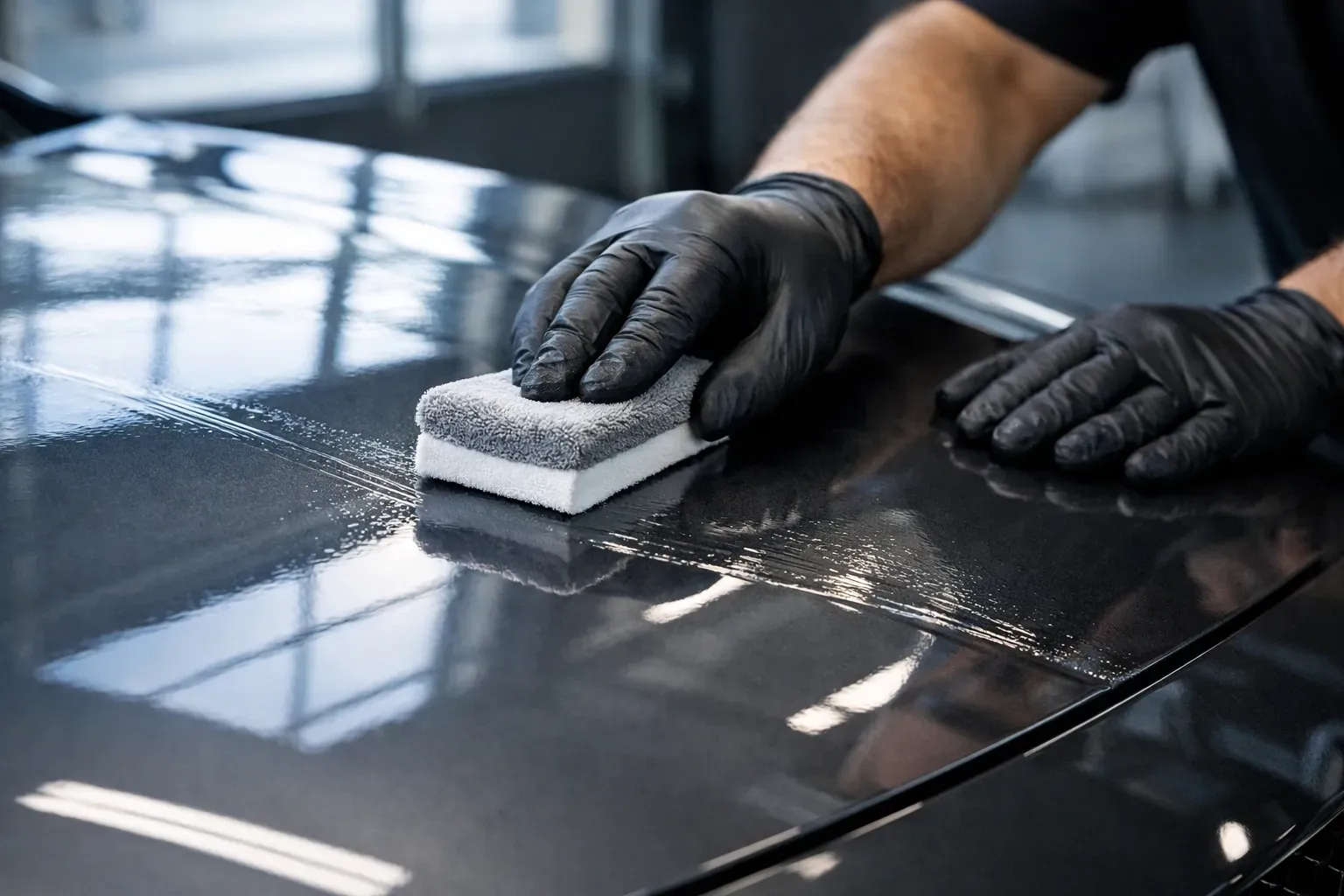
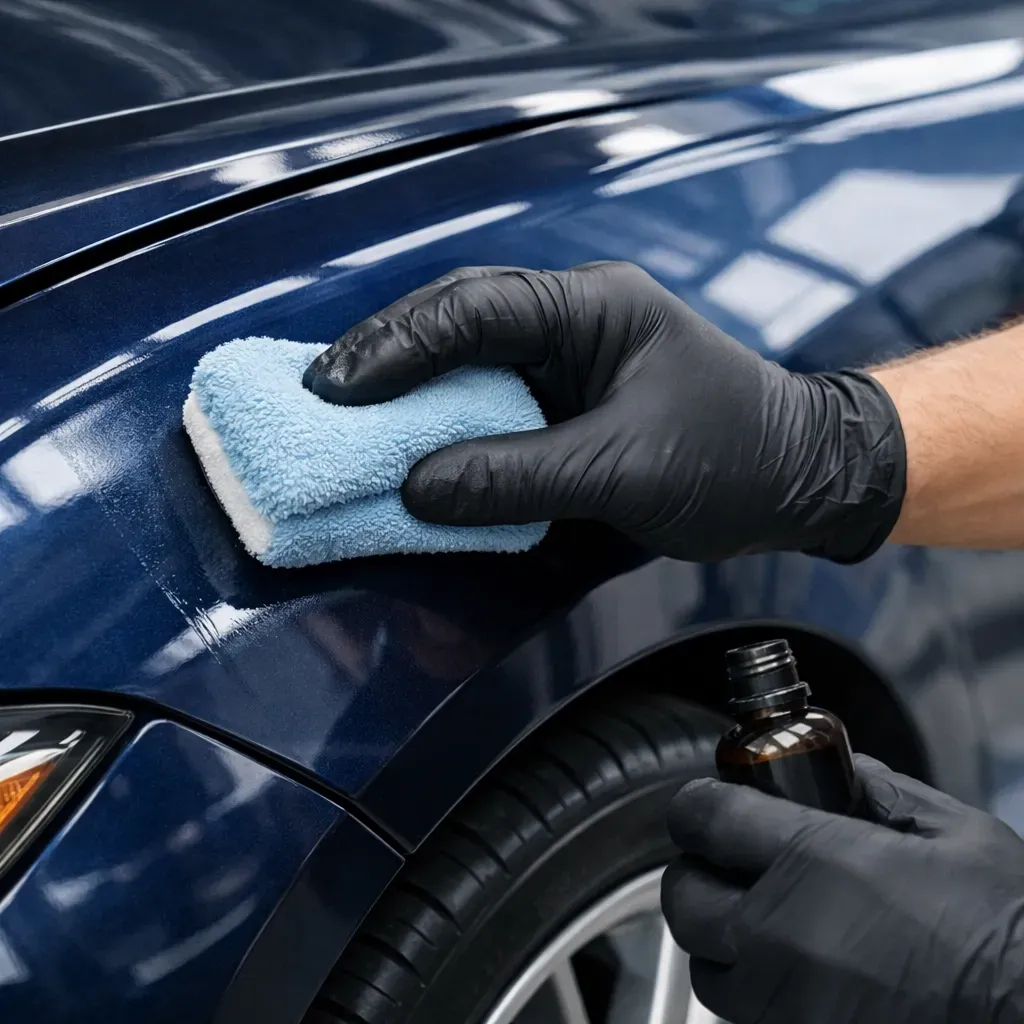
After we perform a thorough decontamination and multi-stage paint correction to remove swirls and scratches, we move to the coating phase. We use high-quality microfiber applicators to hand-apply the liquid ceramic. This allows us to feel the surface and ensure the coating is leveling correctly. This manual precision is vital around complex body lines, grilles, and emblems found on modern vehicles in Missouri City or Bellaire. By working the product into the paint by hand, we guarantee a bond that is far superior to automated or rushed applications.
Do ceramic coatings help with the industrial fallout found in Baytown and Pasadena?
One of the unique challenges of driving in the Houston area, specifically near Pasadena and Baytown, is industrial fallout. The air near the shipping corridors and refineries often contains microscopic metal particles and chemical residues that settle on your car’s paint. On a waxed car, these particles can easily embed themselves into the soft wax or the clear coat itself, leading to "rail dust" or tiny rust spots.
Because a ceramic coating creates such a hard, slick surface, these contaminants have a much harder time sticking. The high surface tension of the coating prevents industrial pollutants from bonding. When you do wash your car, these contaminants usually slide right off with the rinse water. This chemical resistance is a game-changer for people who commute through industrial zones every day. It keeps the surface smooth to the touch and prevents that "sandpaper" feel that often plagues unprotected vehicles in East Harris County.
How does ceramic coating compare to Liquid Paint Protection Film (LPPF)?
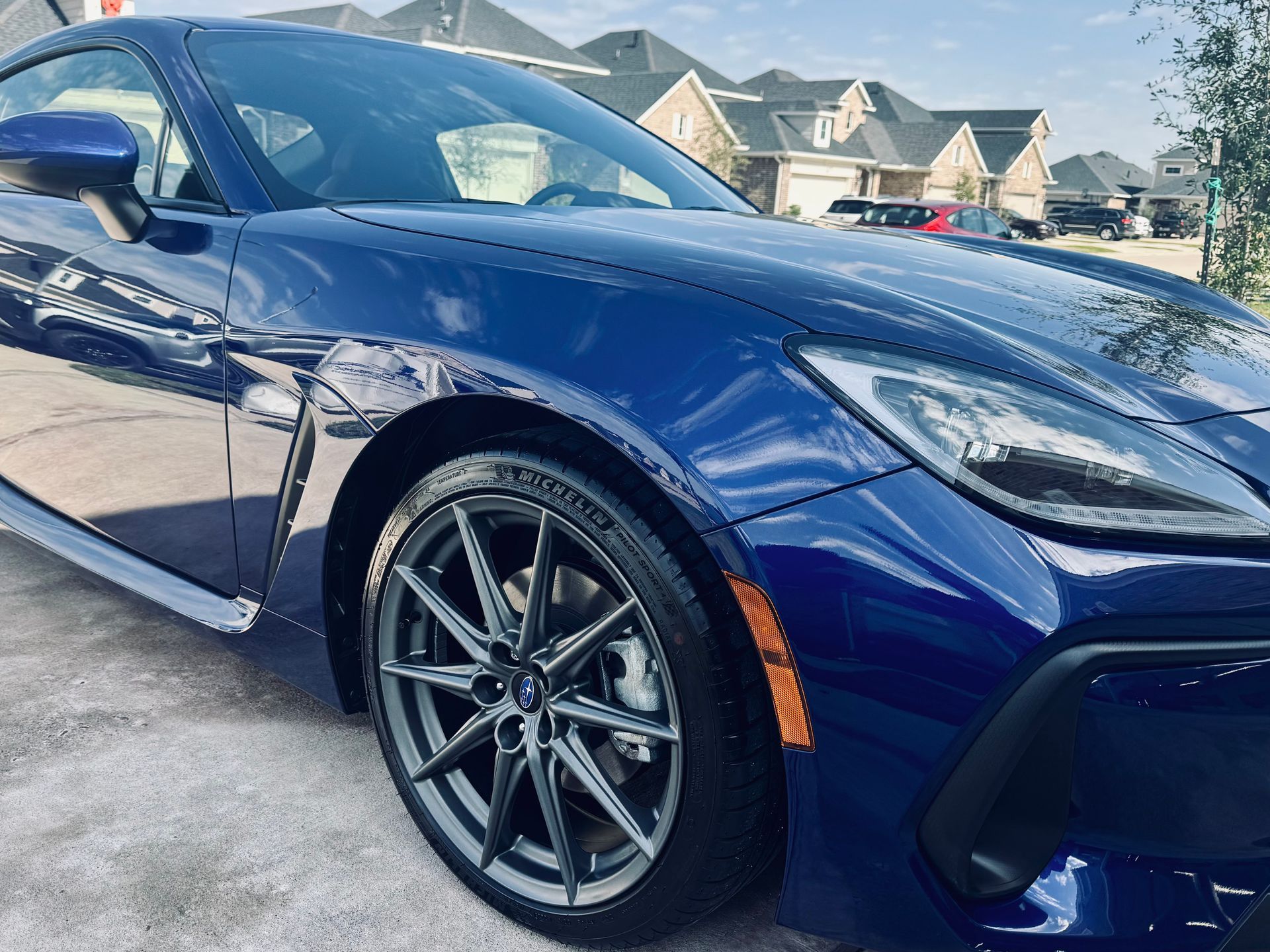
While ceramic coatings are fantastic for chemical resistance, UV protection, and gloss, some drivers need an extra level of physical defense. This is where Liquid Paint Protection Film (LPPF) comes into play. We often suggest LPPF and Ceramic Coating as complementary options. While a coating is a thin, hard layer, LPPF is a thicker, hand-applied barrier designed to absorb impacts from road debris and small stones.
If you spend a lot of time on the Beltway or I-610, you know that rock chips are inevitable. For the ultimate protection package, many of our clients in Pearland and Sugar Land choose to have LPPF hand-applied to high-impact areas like the hood and bumper, followed by a full ceramic coating over the entire vehicle. This gives you the impact resistance of a film with the incredible gloss and self-cleaning properties of a ceramic coating. Since our LPPF is applied by hand, it flows seamlessly with the lines of the car, avoiding the unsightly edges often seen with traditional plastic films.
How do I maintain my ceramic coating to ensure it lasts for years?
Maintaining a ceramic coating is significantly easier than maintaining a waxed car, but it does require a specific technique to ensure maximum longevity. The most important rule is to avoid abrasive automatic brush washes. These brushes can trap dirt from the previous truck and swirl your coating. Instead, we recommend a simple two-bucket hand wash or a high-quality touchless wash.
Using a pH-neutral shampoo is key. Since the coating is already doing the heavy lifting of repelling dirt, you don’t need aggressive degreasers. After washing, many of our clients in Deer Park or La Porte use a ceramic-infused drying aid to top off the hydrophobic layer. This keeps the surface "slick" and ensures that the coating continues to perform like new for years. If you ever feel like the coating isn't beading water as well as it used to, a professional decontamination wash can usually strip away the surface film of road grime and "clogged" pores, restoring the coating to its original glory.
Whether you are in Alvin, Dickinson, or Texas City, protecting your investment is a priority. While wax has its place in the history of detailing, the modern Houston daily driver demands something more robust. Professional ceramic coating offers the durability, heat resistance, and ease of maintenance that simply can't be matched by traditional methods.
Ready to give your vehicle the protection it deserves? At Ceramic Enthusiasts, we take pride in our meticulous, one-car-at-a-time service. With over 10 years of experience, we know exactly what it takes to keep a car looking its best in the Texas heat.
Connect with us today to discuss which protection package is right for your daily driver. Give us a call at 281-626-9384 to schedule your consultation or visit our services page to learn more about our hand-applied coatings and LPPF options. Let’s make sure your car stays as glossy and protected as the day you bought it.
You might also like
Ceramic Enthusiasts