
5 Steps to Make Your Ceramic Coating Last Longer (The Houston Driver’s Maintenance Guide)
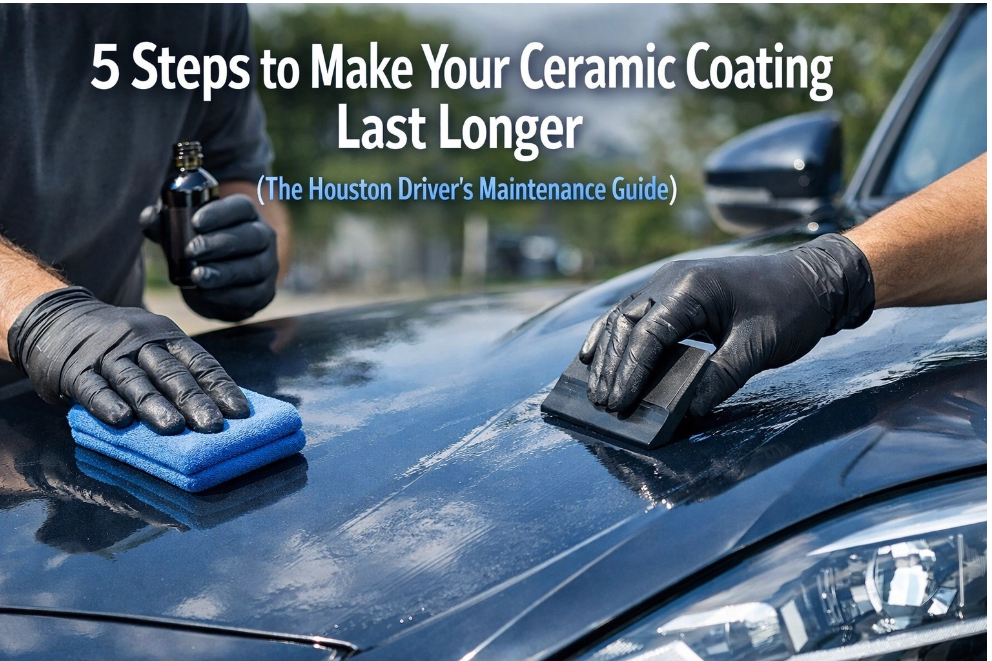
You just invested in a professional automotive ceramic coating to protect your ride from the brutal Texas sun and the unpredictable chaos of Houston traffic. Your car looks better than the day you bought it, deep, mirror-like reflections and water beads that practically leap off the hood. But here’s the reality: while ceramic coatings are incredibly durable semi-permanent shields, they aren't "set it and forget it" solutions. In a city where 95-degree humidity meets industrial fallout and thick layers of yellow pollen, your coating has to work overtime. At Ceramic Enthusiasts, we take an owner-operated, one-car-at-a-time approach because we know that the difference between a coating lasting two years or five years comes down to the details. If you want to maximize your investment, you need a maintenance routine tailored to the Gulf Coast climate.
How Often Should You Wash Your Ceramic Coated Car in Houston?
You should aim to wash your vehicle every two weeks to maintain the integrity of the coating. In Houston, the combination of high humidity and construction dust creates a "film" that clings to your car. If you live near the shipping corridors or refineries in Pasadena, that environmental fallout is even more aggressive. Leaving contaminants on the surface for too long allows them to bond to the coating, which can eventually "clog" the pores of the ceramic, killing those hydrophobic properties you love.Establishing a routine is the most effective way to ensure your ceramic coating Houston treatment reaches its full lifespan. During peak pollen seasons in Pearland or Friendswood, you might even find yourself doing a quick rinse once a week just to keep the acidity of the pollen from sitting on the surface. While the coating is chemical resistant, it isn't bulletproof. Regular decontamination keeps the surface slick and prevents "road film" from masking the gloss.
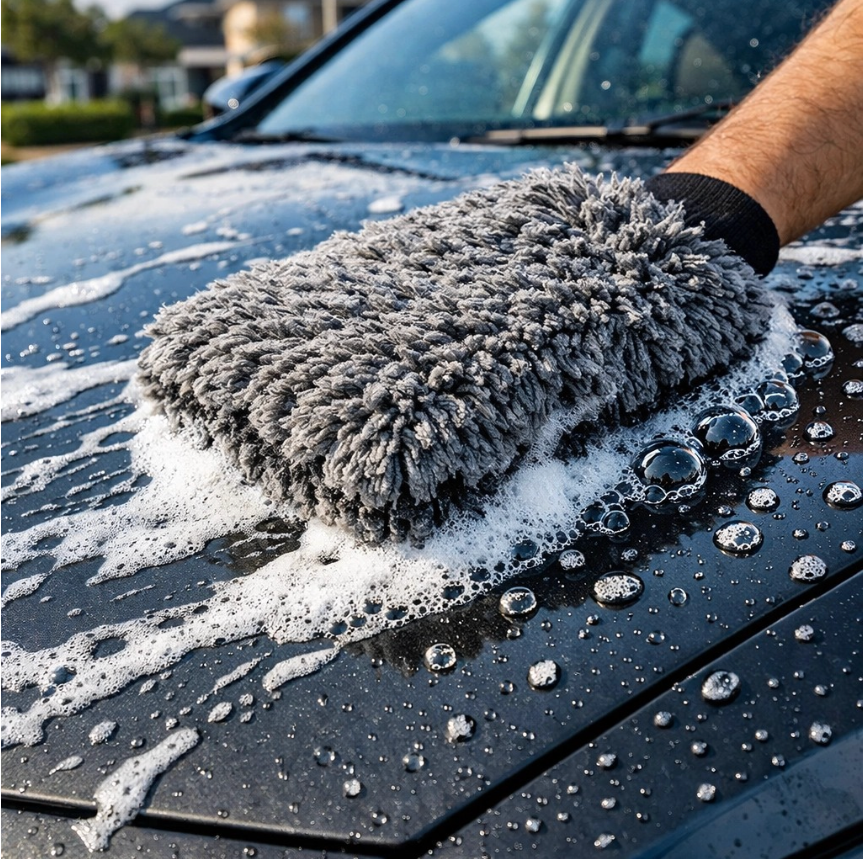
(Visual: A close-up, hands-on shot of a technician’s hand wearing a specialized wash mitt, gently gliding over a lubricated car panel, showing the "one car at a time" care.)
How Often Should You Wash Your Ceramic Coated Car in Houston?
No, you should absolutely avoid automatic "tunnel" car washes if you want your coating to last. Those spinning plastic brushes are essentially "swirl-o-matics." Even the "touchless" versions use high-pH recycled water and aggressive detergents designed to strip wax, which will prematurely degrade your ceramic layer over time. Instead, you need to use the two-bucket hand wash method. The two-bucket method involves one bucket filled with soapy water and a second bucket with plain water for rinsing your wash mitt. Every time you wipe a section of your car, you rinse the mitt in the plain water bucket first to drop any trapped dirt. This ensures you aren't rubbing grit back into the paint. When we perform exterior detailing or mobile detailing in Houston, we follow this meticulous process to ensure the paint remains swirl-free. It’s about being "hands-on" with your maintenance rather than relying on a machine that doesn't care about your clear coat.
Which Soap Is Best for Maintaining Your Coating?
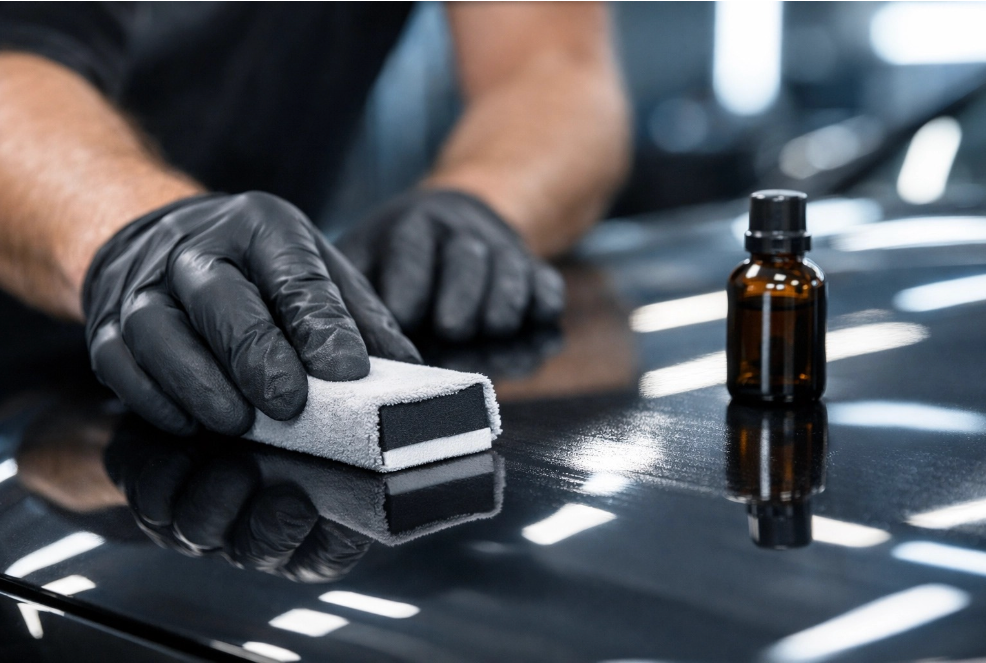
You must use a pH-neutral automotive shampoo specifically formulated for ceramic coatings. Many "off-the-shelf" soaps at big-box stores contain waxes, silicones, or heavy degreasers that can leave a residue on top of your coating. This residue creates a "masking" effect where the car looks dull and water no longer beads, even though the coating is still underneath. When you're auto detailing in Houston, look for "pure" soaps. These are designed to lubricate the surface and lift dirt without adding any temporary waxes. Using a pH-neutral soap ensures the molecular bond of the SiO2 (silicon dioxide) remains intact. If you’ve opted for our Platinum Package Ceramic Coating, using the right chemicals is the difference between a decade of protection and a few short years of shine.
Do I Need to Dry My Car If the Coating Is Hydrophobic?
Yes, you must dry your car thoroughly, and you should do it with a high-quality, clean microfiber towel. While the water-beading effect is impressive, the "hard water" in areas like League City or South Houston is loaded with minerals. If you let the sun bake those beads onto your paint, the water evaporates, leaving mineral deposits (water spots) behind. Because the coating is so smooth, these minerals can actually etch into the ceramic layer if left long enough. To prevent this, use a dedicated drying aid or a "topper" spray while the car is still damp. This adds a layer of lubrication, making the drying process safer and reducing the risk of marring the finish. We always recommend using a "hands-on" approach here: feel the surface with your microfiber. It should be buttery smooth. If it feels "grabby," you likely have surface contamination that needs a professional touch-up.
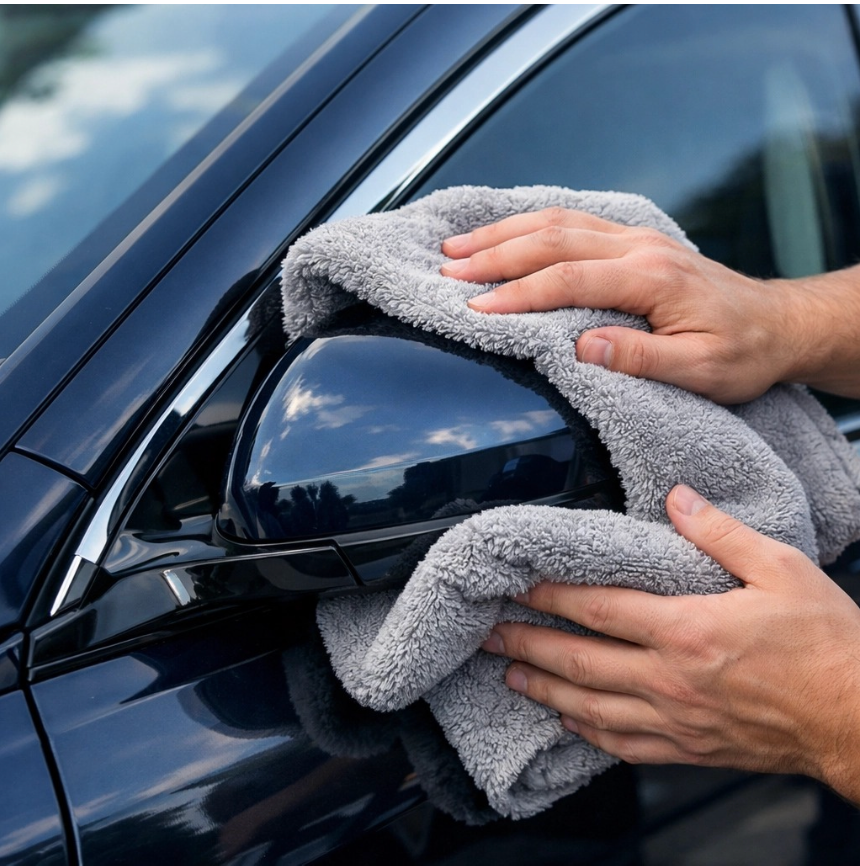
(Visual: A person’s hands using a plush microfiber towel to carefully dry the edge of a side mirror,
demonstrating the attention to detail required for ceramic maintenance.)
How Long Does Ceramic Coating Last with Proper Maintenance?
With proper care, a high-quality ceramic coating can last anywhere from 3 to 10 years, depending on the package you chose. However, "lasting" doesn't mean it stays perfect forever. Much like how Liquid Paint Protection Film (LPPF) might need a professional "re-leveling" if you take a major rock chip, your ceramic coating requires periodic professional maintenance to stay at peak performance. Every 3 to 6 months, we recommend applying a ceramic "topper" or sealant. This sacrificial layer takes the brunt of the UV exposure and environmental abuse, preserving the main coating underneath. Think of it as a "booster shot" for your car’s shine. Once a year, it’s a smart move to schedule a professional decontamination wash. This involves using iron removers and clay bars to pull out the embedded metallic fallout that a standard hand wash can't reach.
Why the "One Car at a Time" Approach Matters
At Ceramic Enthusiasts, we aren't a high-volume "churn and burn" shop. Whether we are doing paint correction in a driveway in Pasadena or applying glass ceramic coating in a garage in Pearland, we focus on the vehicle in front of us. This meticulous attention is why our coatings stand up to the Houston heat so well.We understand that a ceramic coating is a partnership between the installer and the owner. We provide the technical expertise and the elite-grade products, and you provide the consistent maintenance. This combination is what keeps your vehicle looking like a show car on the I-45.
Ready to Protect Your Investment?
If you’ve noticed your coating isn't beading like it used to, or if you're ready to jump into the world of professional protection, we’re here to help. From wheel ceramic coating to full-body interior detailing, we offer the specialized care your vehicle deserves.
Don't let the Houston elements dull your ride. Let's get your car back to that "just coated" glow.
Connect with Ceramic Enthusiasts today to schedule your maintenance or consultation. Call us
at 281-626-9384 Visit our Gallery to see our latest work in the Houston area.
You might also like
Ceramic Enthusiasts