
Paint Correction: Why Your New Car Isn’t Actually 'New'
This is a subtitle for your new post
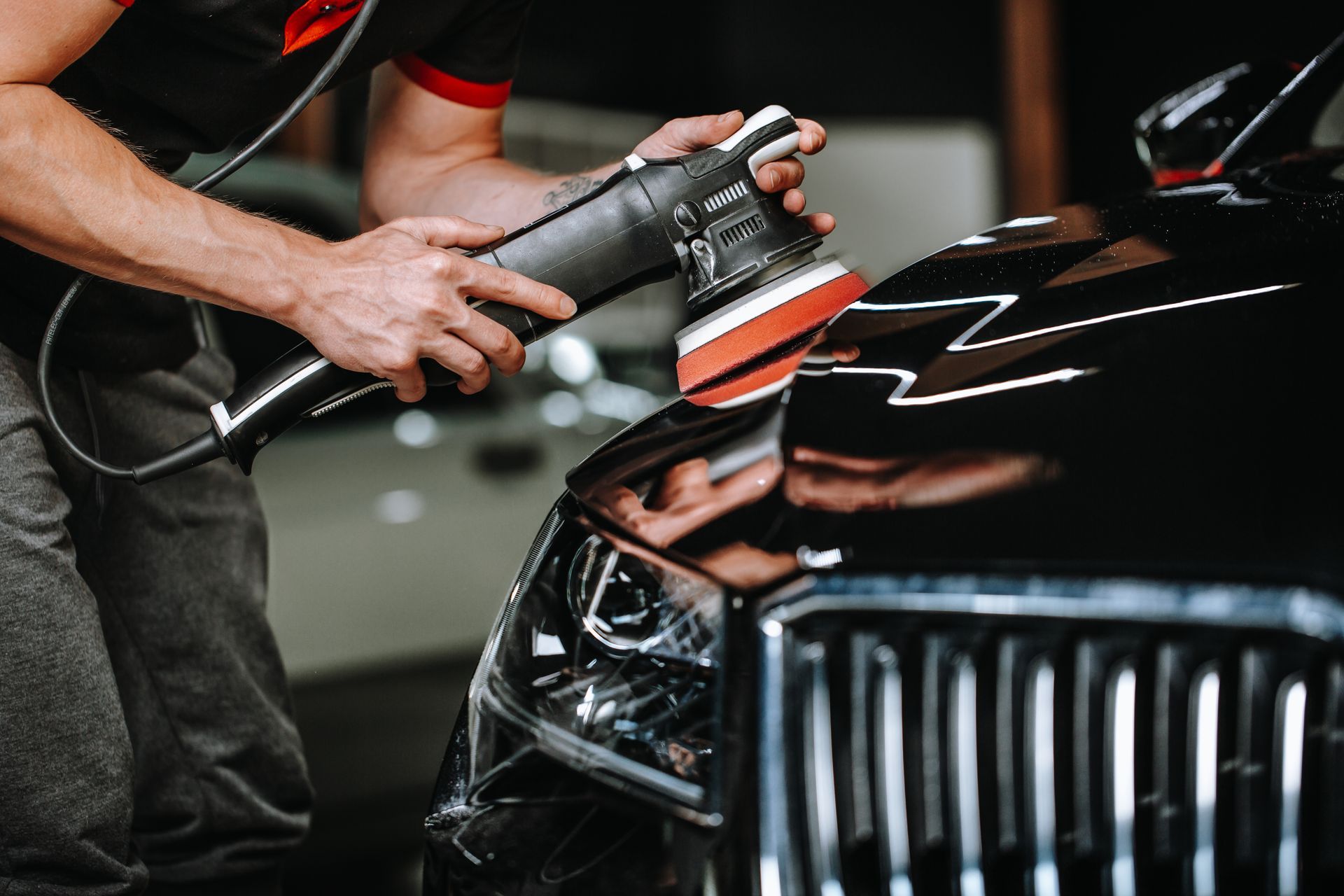
Taking delivery of a brand-new vehicle in Houston should be a moment of absolute perfection. You expect a mirror-like finish, a flawless surface, and that elusive "showroom shine" that suggests your investment is at its peak. However, for most vehicle owners in Pearland, League City, and Sugar Land, the reality of a new car's paint is far different from the expectation.
The truth is that a car is rarely at its most pristine the day you drive it off the lot. Between the factory floor and your driveway, your vehicle undergoes a gauntlet of environmental hazards and improper handling. At Ceramic Enthusiasts, we often find that "new" cars require professional paint correction just as much as: if not more than: vehicles that have been on the road for years. Without addressing these hidden defects, any protective layer you apply will simply lock in damage, preventing the paint from ever reaching its full aesthetic potential.
Why Does Your Brand-New Car Have Paint Defects?
Every new vehicle undergoes a long journey before it reaches a dealership in Friendswood or Houston. The process begins at a massive manufacturing plant where efficiency often takes precedence over individual paint perfection. Modern assembly lines use automated painting processes that, while consistent, are not always flawless. It is common for factory workers to spot-sand small bits of dust or debris out of the clear coat on the assembly line. These "sanding marks" are often left unpolished or are covered with heavy fillers that temporarily hide the dullness.
Once the car leaves the factory, it enters a storage and transport phase that can last weeks or even months. Vehicles sit in massive outdoor holding lots, exposed to industrial fallout, bird droppings, and the Texas sun. During transport, they are subjected to road salt, grime, and debris. By the time the vehicle arrives at a local dealership, the clear coat has already been subjected to multiple cycles of expansion and contraction from heat, along with various chemical contaminants that have begun to bond to the surface.
What Is Rail Dust and How Does It Damage Your Vehicle?
One of the most insidious threats to a new car's finish is a phenomenon known as rail dust. Most vehicles are transported across the country via rail. As the train travels, the friction between the metal wheels and the tracks creates a fine spray of hot metallic particles. These particles: industrial fallout: settle onto the horizontal surfaces of the vehicles.
Because these metal shards are hot, they literally melt into the soft clear coat of your new car. Once they cool and bond, they begin to oxidize. If you own a white or light-colored vehicle in Pasadena or League City, you might notice tiny orange or brown specks that look like rust. This is rail dust.
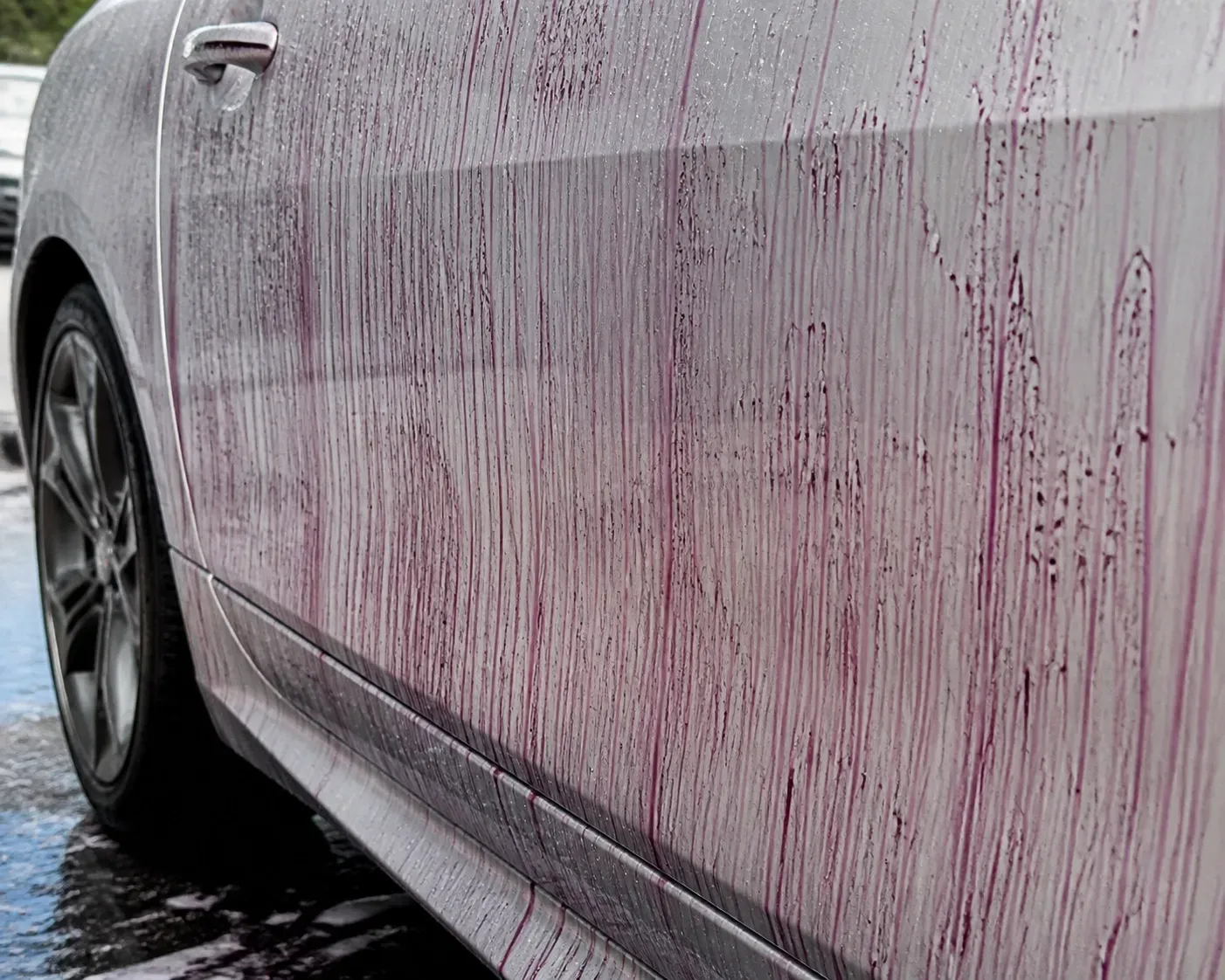
Washing your car with traditional soap and water will not remove these particles. They are physically embedded in the paint. If left untreated, these metallic contaminants will continue to rust and expand, eventually causing micro-pitting in the clear coat. Before we apply any Automotive Ceramic Coating, we perform a rigorous chemical decontamination. We use specialized iron removers that react with the iron, turning them into a purple liquid that can be safely rinsed away. Without this step, you are essentially sealing rust into your vehicle’s finish.
Do Dealership Washes Actually Damage Your New Car?
The final step in a car’s journey to you is the "dealership prep." This is where many of the most visible defects are introduced. Dealerships are in the business of volume, not meticulous detail. When a shipment of cars arrives, the wash crew: often under-trained and over-tasked: uses high-volume tunnel washes or, worse, "waterless" washes with dirty microfiber towels.
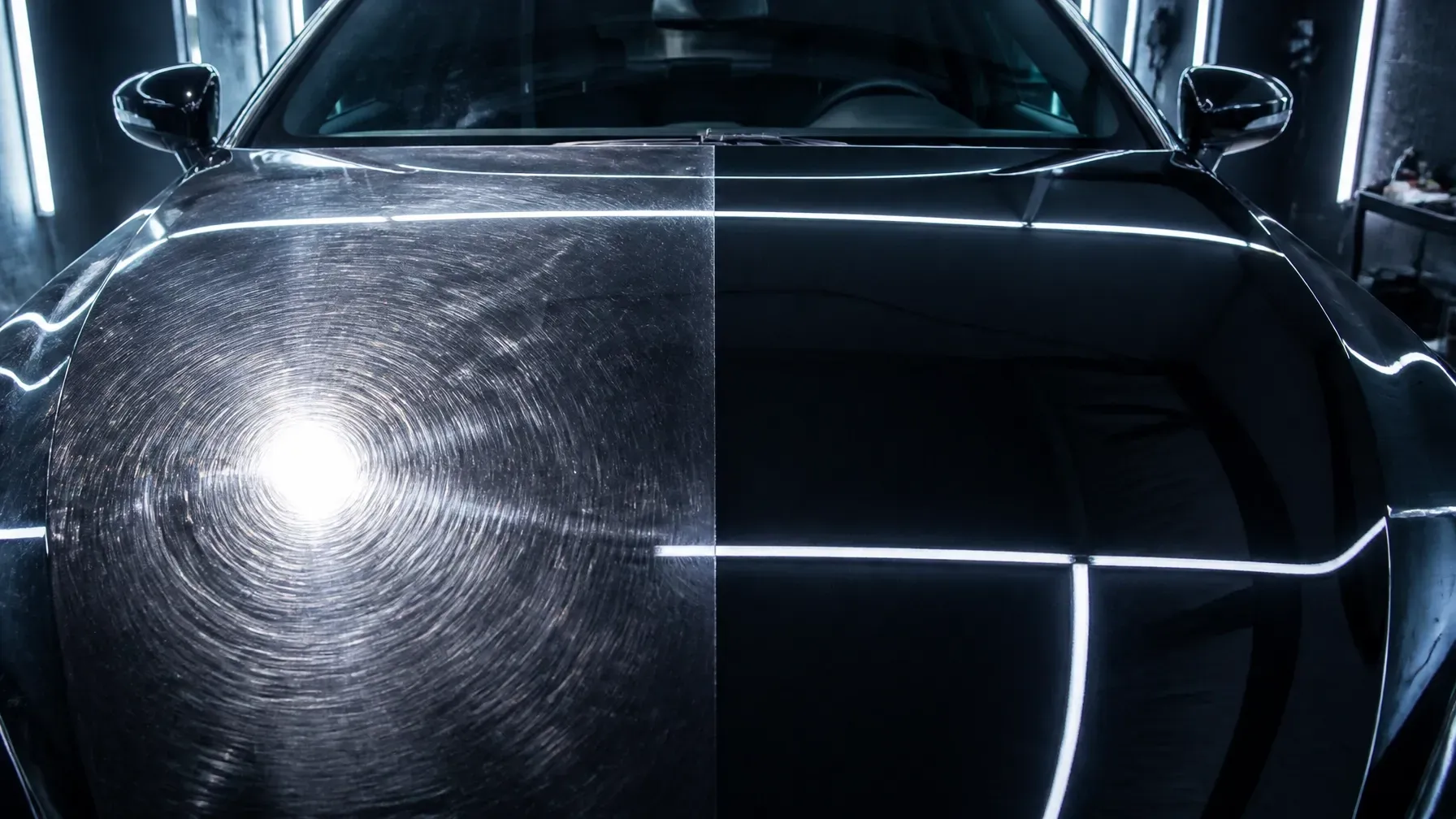
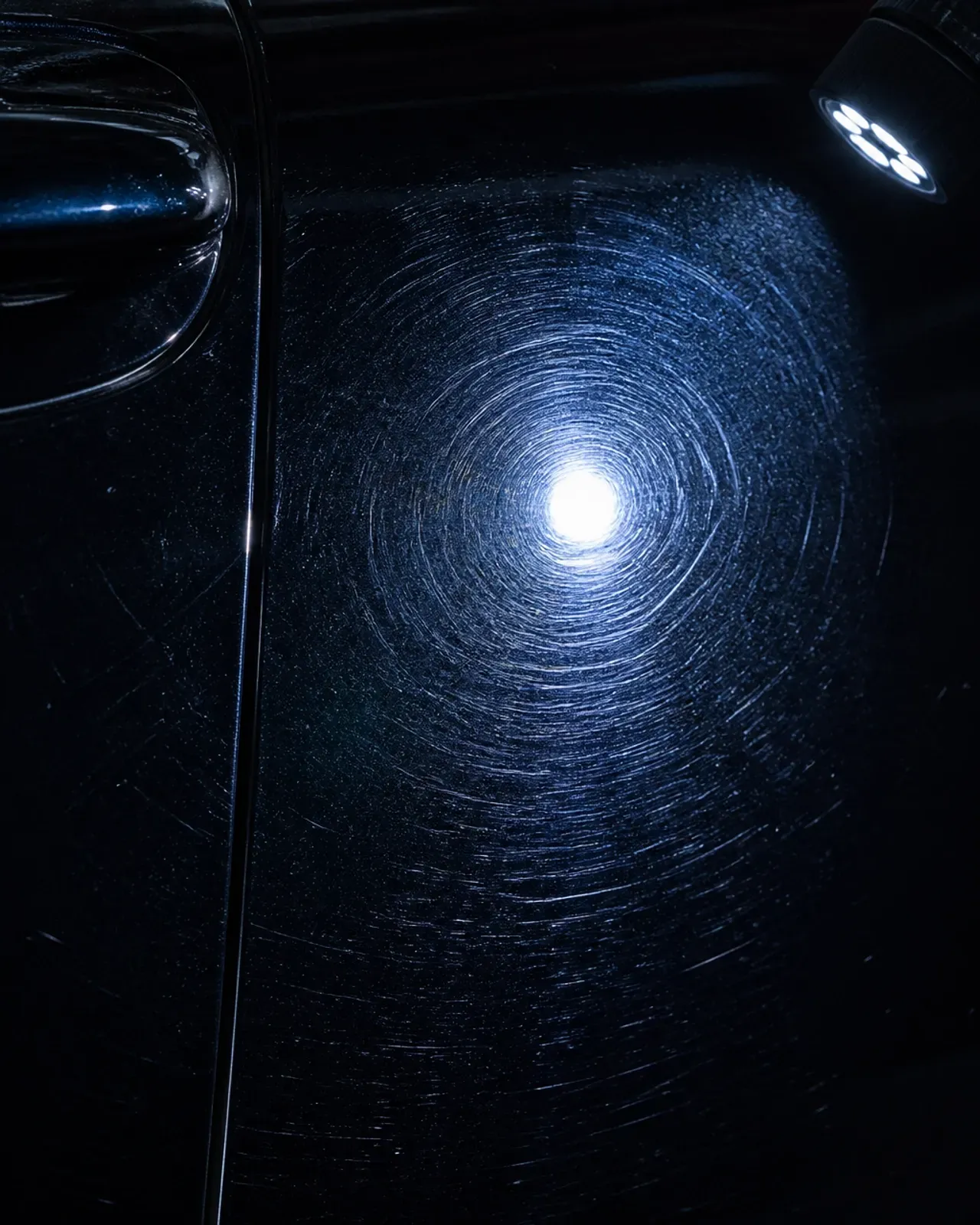
These hasty cleaning methods introduce swirl marks and micro-scratches, often referred to as "cobwebbing." Using a single bucket of water to wash twenty cars means that the dirt from the first car is being ground into the paint of the last. These scratches are shallow, but they scatter light, which kills the depth and clarity of your paint.
Furthermore, many dealerships use "glazes": heavy oils and silicones designed to fill in scratches and provide a temporary, artificial shine. After three or four washes at home, these fillers wash away, revealing the true, damaged state of the paint underneath. Professional Paint Correction is the only way to permanently remove these defects rather than just hiding them.
How Does Paint Correction Restore a New Car?
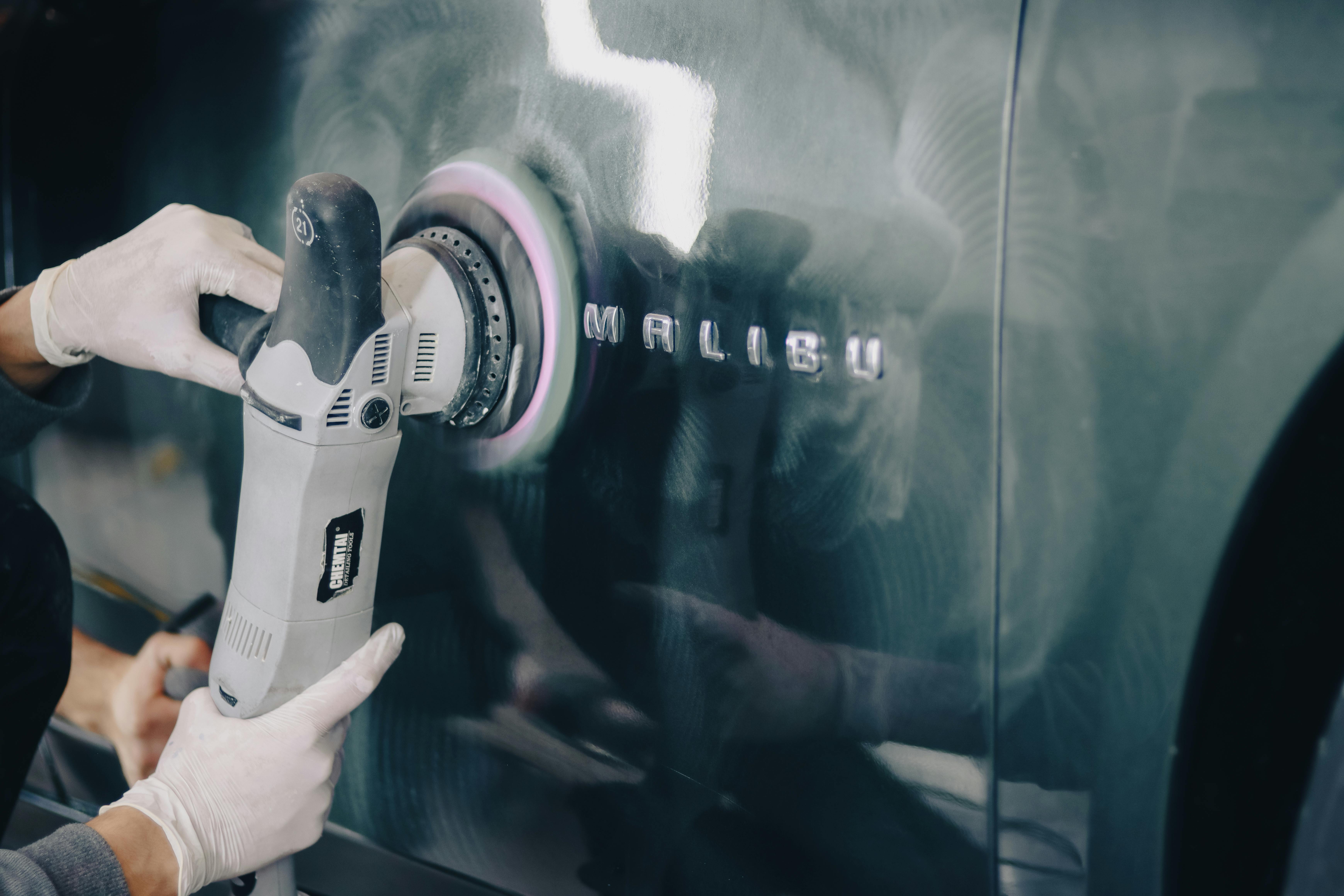
Paint correction is a state-of-the-art polishing process that levels the clear coat to a perfectly flat, mirror-like surface. At Ceramic Enthusiasts, our owner-operated approach ensures that we spend hours: sometimes days: perfecting a single vehicle. We don't believe in the "one-size-fits-all" approach used by high-volume detailers.
The process begins with a multi-stage decontamination. After the iron remover has addressed the rail dust, we use a mechanical clay treatment to pull out any remaining bonded contaminants like tree sap or overspray. Once the paint is "surgically clean," we use LED lighting to map out every swirl, scratch, and factory sanding mark.
Using professional-grade dual-action polishers and varying grades of polishing compounds, we carefully remove a microscopic layer of clear coat. This process eliminates the defects that scatter light, restoring the clarity and depth that the manufacturer intended. Whether you are in Pearland or downtown Houston, the result is a finish that looks better than it did the day it was built.
Why Is Paint Correction Necessary Before Ceramic Coating or LPPF?
A common question we hear is: "Why do I need to polish a car that is only a week old before coating it?" The answer lies in the molecular bonding of our protection products.
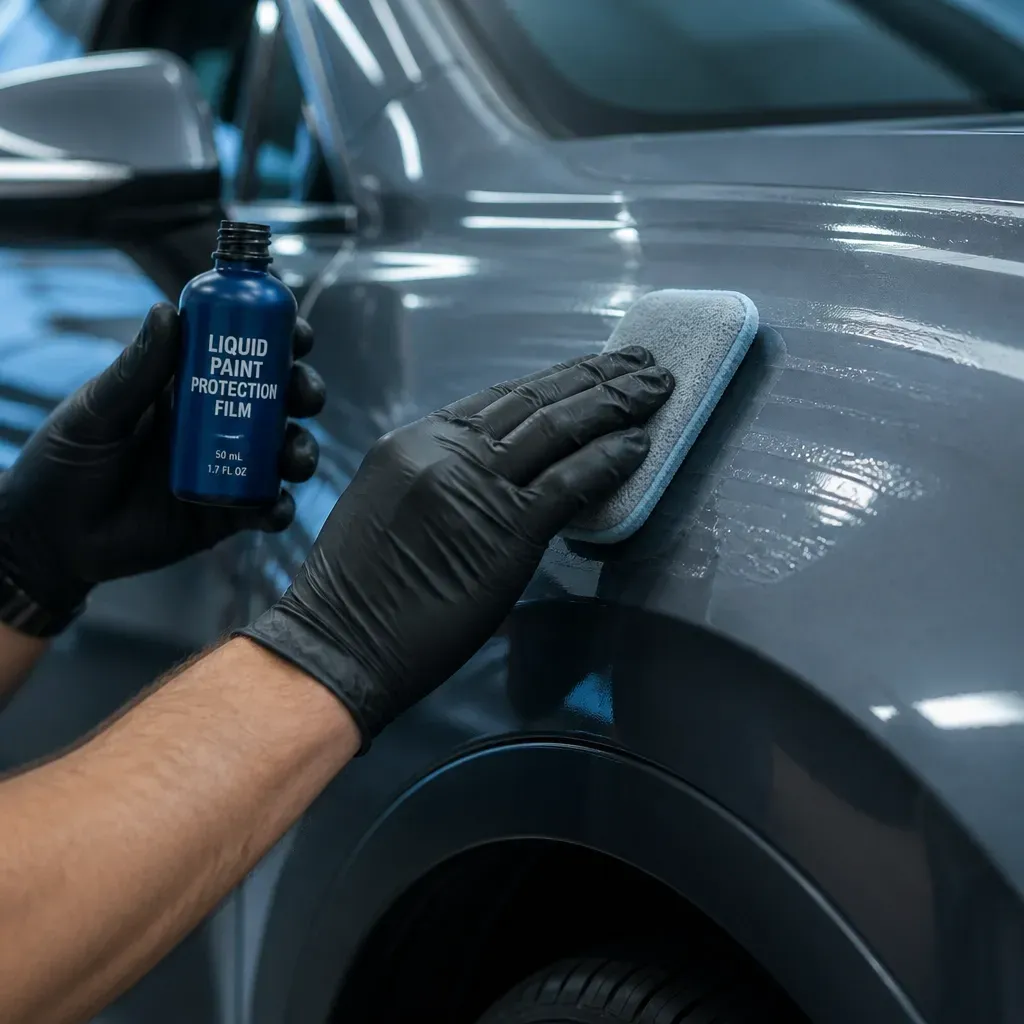
Whether you choose a premium-grade ceramic coating or our hand-applied Liquid Paint Protection Film (LPPF), the product needs a perfectly clean, smooth surface to bond with. If the paint is covered in rail dust, waxes, or dealership glazes, the coating cannot form a semi-permanent bond with the clear coat. This leads to premature failure of the protection.
Furthermore, both Ceramic Coatings and LPPF are highly reflective. They act like a magnifying glass for whatever is underneath them. If we apply a coating over swirl marks, those marks will be "locked in" and even more visible than before.
Our Liquid Paint Protection Film (LPPF) is a particularly popular choice for Houston drivers who want the ultimate defense. Unlike traditional PPF sheets that can have unsightly edges, LPPF is hand-applied using specialized pads and tools. It provides a thick, durable shield against rock impacts and road debris. A key advantage of our LPPF is its ability to be re-leveled. If a rock impact causes a blemish in the film, we can smooth the finish back out without needing to replace an entire panel of film. This level of precision is only possible when the foundation: the paint itself: has been corrected to a professional standard.
Can You Get Professional New Car Prep in Houston?
Ceramic Enthusiasts specializes in "New Car Prep" for discerning owners across the Greater Houston area. We serve clients in:
Our owner-operated model means that your vehicle receives one-on-one attention from an expert with over 10 years of experience. We don't rush through cars to meet a daily quota. We focus on one car at a time, ensuring that every square inch of the paint is inspected and perfected before we apply our specialized protection products.
Houston's climate is notoriously harsh. Between the 95-degree summer heat, high humidity, and the industrial fallout from shipping corridors and refineries, your vehicle's paint is under constant attack. A professional new car prep package: combining paint correction with either a ceramic coating or hand-applied LPPF: is the most effective way to ensure your vehicle looks better than new for years to come.
This is paragraph text. Click it or hit the Manage Text button to change the font, color, size, format, and more. To set up site-wide paragraph and title styles, go to Site Theme.
You might also like
Ceramic Enthusiasts