
Liquid PPF in Houston: What It Is, What It Isn’t, and Who It’s For
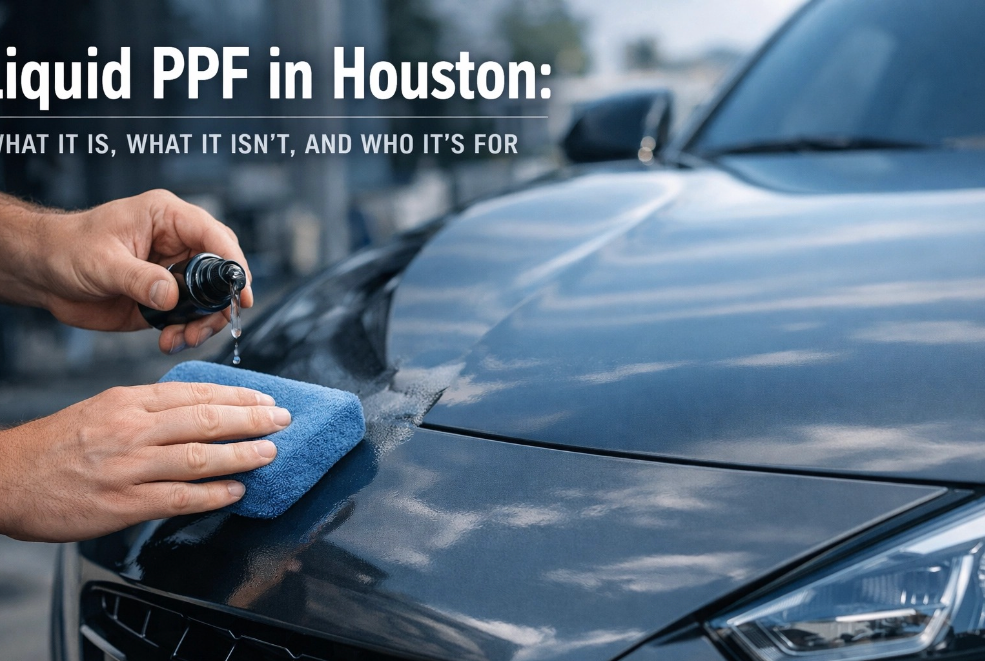
Driving in Houston is a contact sport for your vehicle's paint. Between the constant construction on I-45, the gravel trucks frequenting the 288 corridor, and the punishing Texas sun, your factory clear coat is under a 24/7 assault. While many owners look toward ceramic coatings for gloss and ease of cleaning, there is a growing demand for something tougher: something that actually stops a rock from chipping the paint.
That is where Liquid Paint Protection Film (LPPF) comes in. At Ceramic Enthusiasts, we specialize in this advanced protection method, providing Houston drivers with a seamless, hand-applied barrier that outperforms traditional options in durability and maintenance.
What Exactly Is Liquid PPF?
Liquid Paint Protection Film is a hand-applied, high-build protective layer made from a flexible blend of polyurethane and acrylic polymers. Unlike traditional film that comes in pre-cut sheets, LPPF starts as a liquid. Our technicians meticulously apply it to your vehicle’s high-impact surfaces, where it then cures into a solid, clear, and incredibly tough sacrificial layer.
Once cured, the film typically sits between 6 and 8 mils thick. This thickness is the secret to its success. It provides enough physical mass to absorb the kinetic energy of road debris: like a pebble flying off a dump truck near Pasadena: before that energy can reach your clear coat. It isn't just a coating; it is a physical suit of armor for your car.
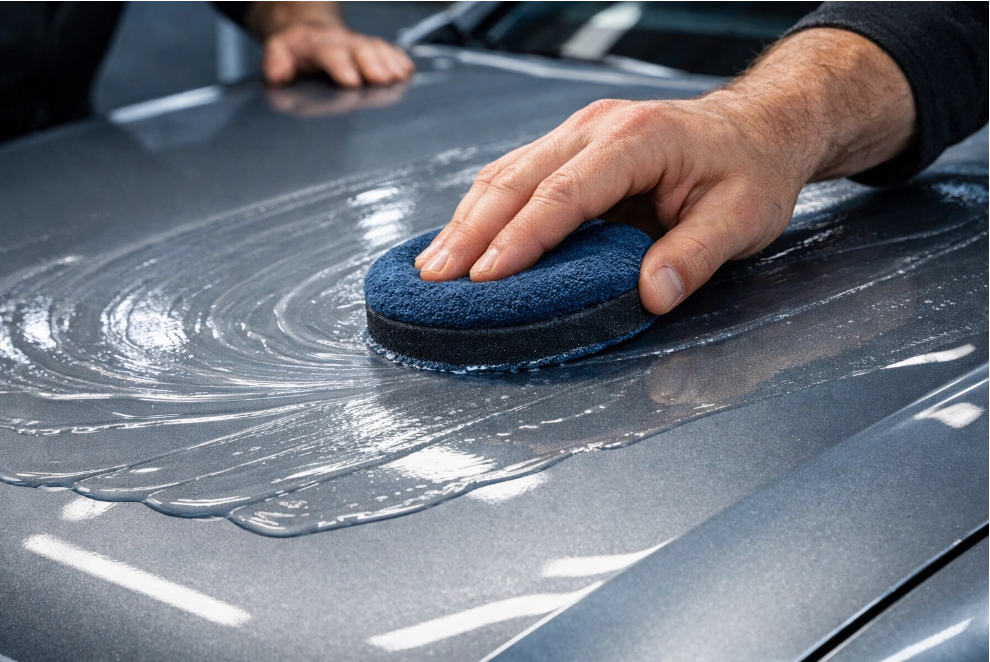
Because it is hand-applied, LPPF flows into every contour of your vehicle. You won't find the visible seams, relief cuts, or lifting edges that often plague traditional film installs. It creates a completely uniform surface that is virtually invisible to the naked eye, preserving the original lines of your vehicle while providing professional-grade defense.
How Does Liquid PPF Differ From Traditional Film?
The most significant difference lies in the application and the long-term finish. Traditional PPF is a plastic sheet with an adhesive backing. Over time, those sheets can "pit": meaning small rocks create tiny craters in the plastic that stay there forever. Traditional film also struggles with Houston’s humidity and heat; over years of exposure, edges can begin to peel or collect dirt, creating a visible "line" of grime around your fenders or hood.
Liquid PPF solves these issues through its bonding process. Because it is applied by hand as a liquid, it creates a semi-permanent bond with the surface. There are no "edges" to peel because the film covers the entire panel and wraps naturally around the ends. It doesn't rely on a separate adhesive layer that can fail in the 100-degree Houston summer.
Furthermore, LPPF offers higher tensile strength. The polyurethane-acrylic blend is engineered to be more resilient against the "pitting" effect. While traditional film is a passive barrier, LPPF is an active defense system designed to stay clear and smooth for years, not just months.
Can Liquid PPF Be Repaired After a Rock Impact?
This is the primary reason why Ceramic Enthusiasts chooses LPPF over any other protection. Most people have heard the term "self-healing" in the detailing world, which usually refers to a film that uses heat to close up tiny swirl marks. However, a "self-healing" film can’t fix a deep impact from a heavy piece of road debris.
Liquid PPF offers something much more practical: Re-leveling.
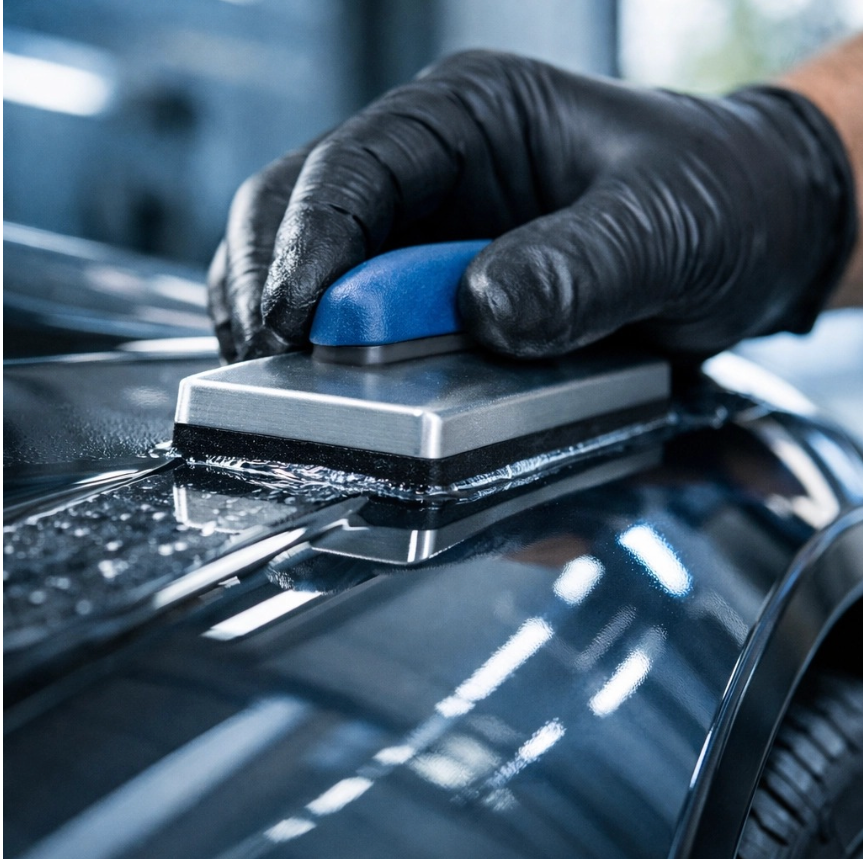
When a rock hits your car at highway speeds, it creates a physical displacement in the protective layer. With traditional film, you’re stuck with that mark unless you replace the entire piece. With Liquid PPF, we can actually re-level the surface. Our technicians use specific tools and techniques to smooth out the impacted area, effectively restoring the film to a flat, mirror-like finish without needing to strip the panel and start over.
Why Does the Houston Climate Make LPPF Necessary?
Houston presents a unique set of challenges for any vehicle owner. It’s not just the traffic; it’s the environment.
- Construction Debris: Whether you are commuting from Pearland or League City, you are likely driving through active construction zones. Gravel, shards of concrete, and metal debris are constant threats.
- Intense UV Exposure: The Texas sun is brutal. Unprotected paint can oxidize and fade in just a few years. LPPF contains high-grade UV inhibitors that prevent the sun from reaching your clear coat, keeping the color vibrant.
- Humidity and Moisture: With nearly 50 inches of annual rainfall and constant high humidity, moisture-related corrosion is a real risk. LPPF creates an airtight seal that prevents moisture from sitting against the paint surface.
- Chemical Resistance: From the industrial fallout near South Houston to the bird droppings and tree sap found in Friendswood, LPPF acts as a chemical barrier that stops stains from etching into your paint.
Who Is the Ideal Candidate for Liquid PPF?
Not every driver needs a full LPPF treatment, but for many, it is the most cost-effective way to preserve a vehicle's value.
• The Daily Commuter: If you spend 40 minutes a day on I-45 or the Sam Houston Tollway, your front bumper is essentially a target for rocks. LPPF is a must for anyone who wants to avoid the "peppered" look of a chipped-up hood after two years of driving.
• Luxury and Exotic Owners: For high-end vehicles, the cost of paint correction and respraying a bumper can be astronomical. LPPF preserves the factory paint, which is critical for maintaining the car's resale value.
• New Vehicle Owners: The best time to apply LPPF is the day you take delivery. By sealing the paint while it's perfect, you lock in that showroom shine.
• Those Who Value Aesthetics: If you hate the look of traditional film seams but want more protection than a ceramic coating can provide, Liquid PPF is the only real solution.
Do I Still Need a Ceramic Coating If I Have Liquid PPF?
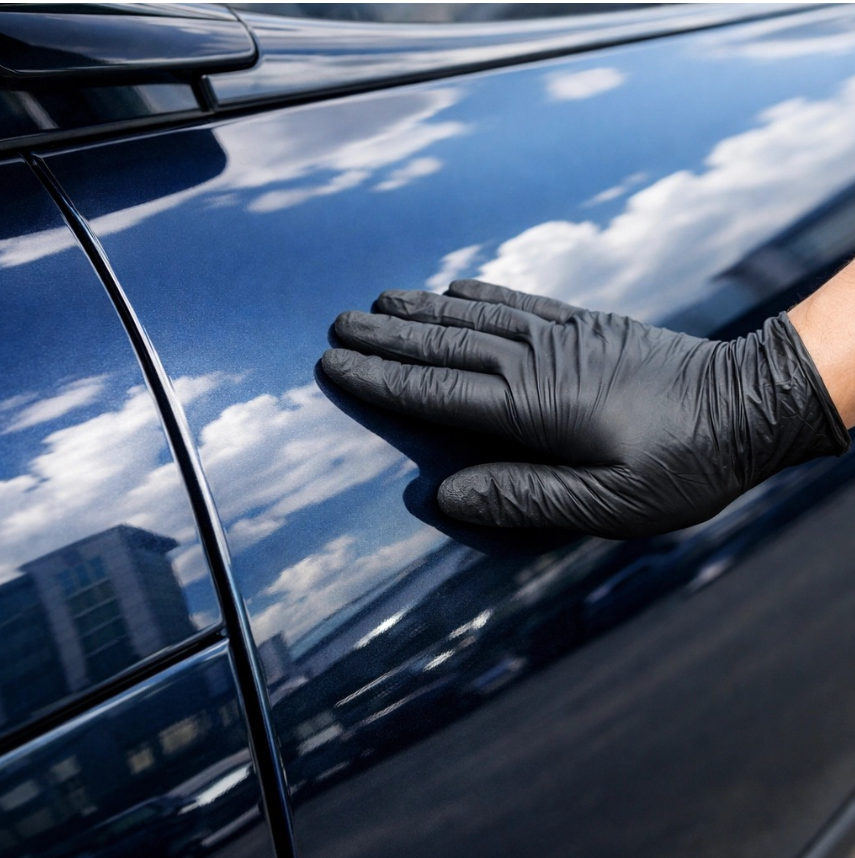
We often get asked if LPPF replaces the need for a ceramic coating. The answer is that they work best as a team.Think of Liquid PPF as your "body armor" and ceramic coating as your "waterproof jacket." LPPF is applied to the high-impact areas: the front bumper, hood, fenders, and mirrors: to stop physical damage. A ceramic coating, like our Gold Package or Platinum Package, is then applied over the entire vehicle, including the LPPF.
This hybrid approach gives you the best of both worlds:
• The LPPF stops the rocks and heavy scratches.
• The Ceramic Coating provides the extreme hydrophobicity (water shedding), high gloss, and ease of washing.
When you combine them, your car becomes incredibly easy to maintain. Dirt and grime struggle to stick to the surface, and the areas most prone to damage are physically reinforced.
What Does the Application Process Look Like?
At Ceramic Enthusiasts, we take a "one-car-at-a-time" approach. We are owner-operated and have spent over a decade perfecting our craft. Applying Liquid PPF is a meticulous, multi-stage process that cannot be rushed.
First, the vehicle undergoes a deep exterior detailing and decontamination. We remove all traces of iron, tar, and old waxes. Next, we perform a paint correction to ensure the surface is as flat and glossy as possible before sealing it.
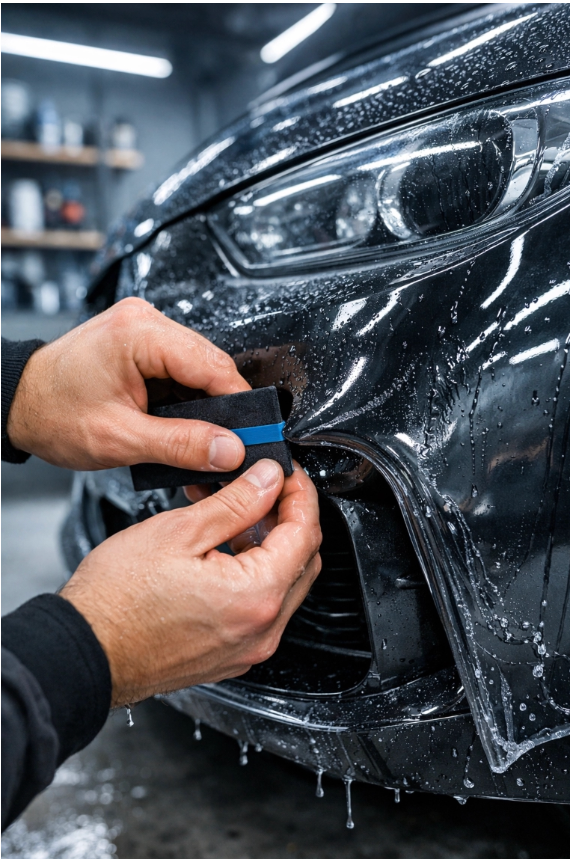
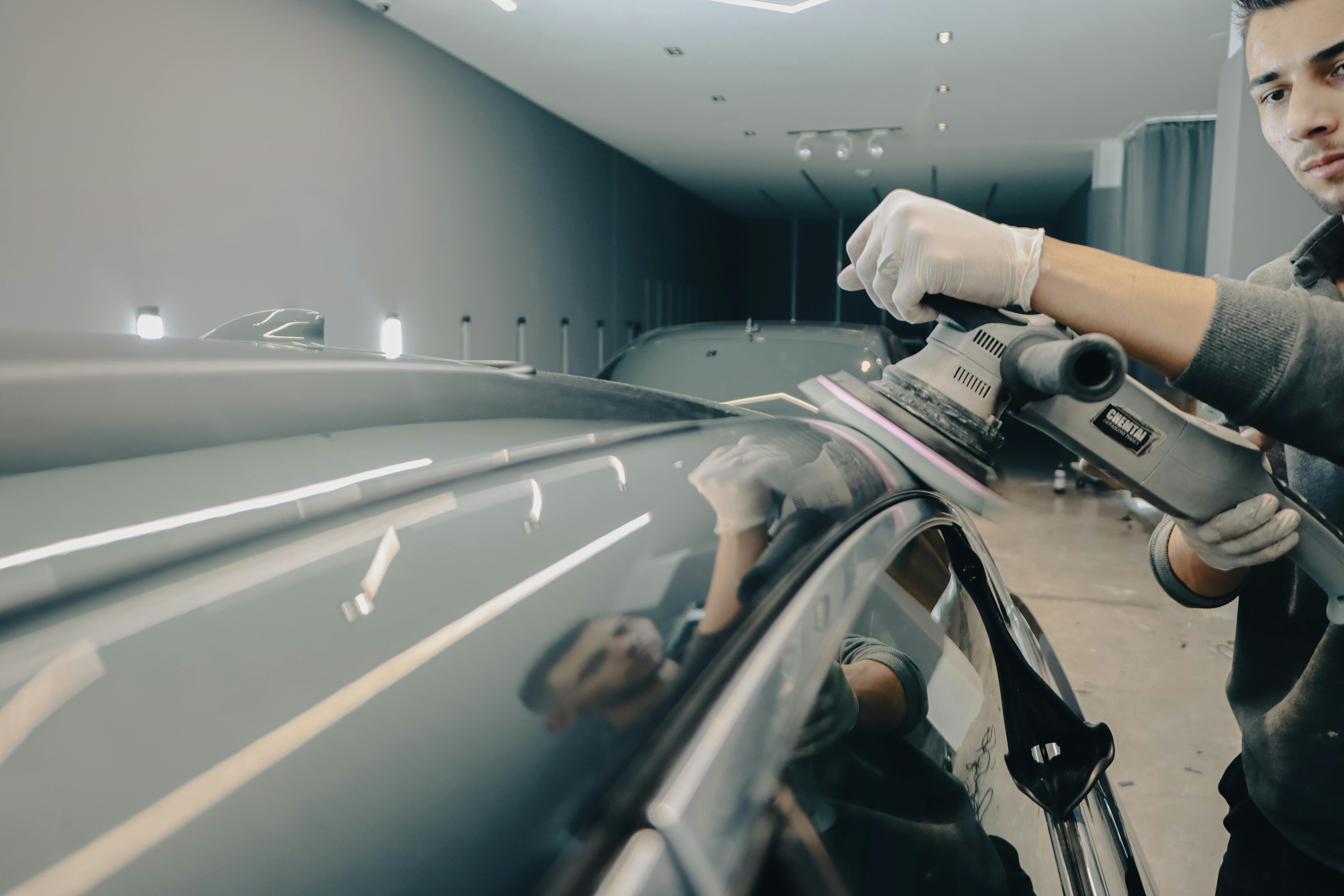
The LPPF is then hand-applied by our expert technicians. We use precision tools to ensure the thickness is consistent across every panel. We pay special attention to edges and curves, ensuring the material wraps smoothly around the bodywork. After application, the film requires a controlled curing environment to reach its full hardness and clarity. This hands-on process is what allows us to deliver a finish that is indistinguishable from factory paint.
Ready to Protect Your Investment?
If you are tired of discovering new rock chips every time you wash your car, it’s time to move beyond basic waxes and thin coatings. Liquid Paint Protection
Film offers the physical defense your vehicle needs for the reality of Houston roads.
Whether you are in Pasadena, Houston, or the surrounding areas, Ceramic Enthusiasts is here to provide the highest level of automotive protection available. We don't just "do cars"; we meticulously preserve them so you can drive with confidence.
Stop the damage before it starts.
Contact Ceramic Enthusiasts today to discuss our LPPF packages and see how we can keep your vehicle looking brand new for years to come.
Call us at 281-626-9384 or visit our Liquid PPF Service Page to learn more and schedule your consultation. (Note: While LPPF is a specialized service, you can find our primary protection options and pricing on our service pages).
For more information on how to care for your vehicle's finish, check out our FAQs or explore our full range of detailing services.
You might also like
Ceramic Enthusiasts