

Ceramic Coating vs Wax in Houston Heat: Which Actually Protects Your Car?
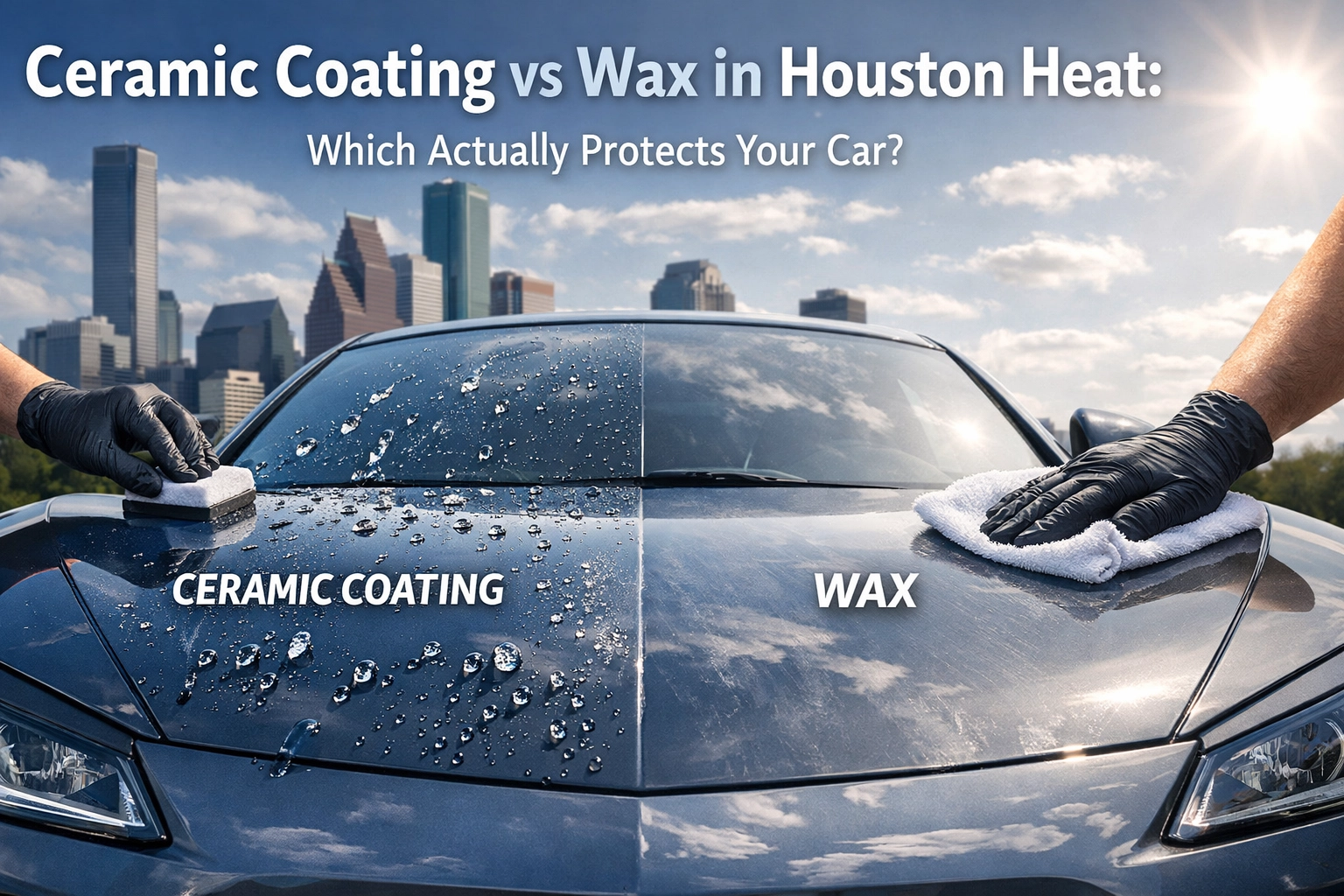
Houston's climate destroys car wax. When temperatures regularly hit 95 degrees and humidity hovers near 90%, traditional wax breaks down in weeks: not months. Your vehicle sits exposed on I-45 or parked outside your Pearland home, baking under relentless UV rays that fade paint and accelerate oxidation. The question isn't whether wax fails in Houston heat. It's how quickly.
Ceramic coating offers a fundamentally different level of protection: one specifically engineered for extreme conditions like those we face across the Greater Houston area.
Which Protection Actually Holds Up to Houston's Heat?
Ceramic coating blocks up to 99% of UV rays while actively reducing infrared heat absorption. Wax provides minimal UV protection and breaks down rapidly under sustained temperatures above 85 degrees. In Houston, where your car's surface can exceed 150 degrees on a summer afternoon, this difference matters immediately.
The molecular structure of ceramic coating creates a semi-permanent bond with your vehicle's clear coat. This bond doesn't melt, evaporate, or wash away when exposed to heat. Wax sits on top of the paint as a sacrificial layer that liquefies under direct sun exposure, running off in streaks and leaving uneven coverage within 4-6 weeks.
After over a decade working on vehicles in Houston, Pearland, and Pasadena, we've seen the pattern countless times. Cars protected with quality wax look great for three weeks. By week eight, the protection is gone. Ceramic coating maintains its hydrophobic properties and UV defense for years, not weeks.
How Long Does Ceramic Coating Last Compared to Wax?
Professional-grade ceramic coating lasts 2-5 years with proper maintenance. Wax requires reapplication every 1-3 months to maintain any meaningful protection. For Houston drivers, this translates to 8-10 wax applications per year versus a single ceramic coating service that protects through dozens of weather cycles.
The cost calculation shifts dramatically when you factor in long-term value. A ceramic coating installation costs more upfront but eliminates the recurring expense and time commitment of quarterly waxing. More importantly, it prevents the cumulative UV damage that occurs during those gaps between wax applications when your paint sits unprotected.
Ceramic coating also resists chemical contamination from industrial fallout: a real concern near Houston's shipping channels and refinery corridors. Wax offers no meaningful barrier against acidic rain or airborne pollutants that land on your vehicle during the daily commute through Pasadena or South Houston.
What Happens to Wax in 95-Degree Heat?
Wax melts. The carnauba-based formulas that perform adequately in moderate climates become liquid films in Houston summer temperatures. This creates several problems beyond simple protection failure.
When wax liquefies, it attracts and holds contaminants. Dust, pollen, and brake dust embed in the softened wax layer, creating a grimy surface that requires aggressive washing to remove. These repeated harsh washes strip away the remaining wax even faster, leaving your paint completely exposed.
Ceramic coating maintains its rigid molecular structure regardless of temperature. The hydrophobic surface continues repelling water, dirt, and contaminants even when your car sits in direct sun for hours. Water beads and rolls off, taking surface dirt with it: a property that remains consistent whether your vehicle is parked in League City or Friendswood.
The heat resistance of ceramic coating also keeps your paint cooler. By reflecting infrared radiation, the coating reduces surface temperatures by several degrees compared to waxed or unprotected paint. This temperature reduction slows oxidation and prevents the heat-accelerated clear coat failure common on Houston vehicles.
Can Ceramic Coating Survive Houston's Humidity and Rain?
Yes. Ceramic coating thrives in high-humidity environments where wax fails completely. The chemical-resistant properties that make ceramic coating durable also make it impervious to moisture penetration and water spotting.
Houston's combination of heat and humidity creates perfect conditions for water spots: mineral deposits left behind when water evaporates on hot surfaces. Wax provides no defense against these spots because water easily penetrates the soft wax layer and bonds with the paint underneath. Ceramic coating's extreme hydrophobicity prevents water from sitting long enough to leave deposits.
Heavy rain events: common during spring and fall in the Houston area: wash away wax protection in a single storm. Ceramic coating remains bonded to the clear coat regardless of rainfall intensity. This consistent performance matters when afternoon thunderstorms roll through weekly and you can't reapply wax between each weather system.
The coating also protects against humidity-related oxidation. When moisture sits on unprotected or poorly protected paint, it accelerates the chemical reactions that cause fading and chalking. Ceramic coating creates a barrier that prevents moisture contact with the clear coat entirely, stopping oxidation before it starts.
Which Protection Reduces Maintenance Time?
Ceramic coating cuts washing frequency and effort dramatically. The slick, non-porous surface prevents dirt from bonding to paint, so contaminants rinse away with minimal pressure. Most ceramic-coated vehicles in Houston stay cleaner longer and wash faster when needed.
Wax creates a sticky surface once it begins degrading. As the wax breaks down in heat, it becomes tacky and actually attracts dirt rather than repelling it. This means more frequent washes using harsher techniques to remove embedded grime: exactly the opposite of what you want for long-term paint health.
We've detailed hundreds of ceramic-coated vehicles around Houston over the past decade. The maintenance pattern is consistent: owners wash their cars half as often and spend a fraction of the time doing it. The hydrophobic properties remain strong enough after years that a simple rinse removes most surface contamination.
Do Professional Application Methods Matter in Houston's Climate?
Absolutely. Generic ceramic coatings applied without proper paint correction fail quickly in Houston conditions. The intense UV exposure and temperature cycling reveal every imperfection in surface preparation. Any contamination or oxidation trapped under the coating creates failure points where protection breaks down.
Our process starts with thorough decontamination to remove industrial fallout, tar, and embedded brake dust: contaminants particularly common on vehicles driven through Houston's industrial corridors. We follow with paint correction to eliminate swirls and oxidation, creating the smooth surface required for proper ceramic bonding.
The coating formulations we use are selected specifically for high-temperature, high-humidity environments. Not all ceramic products perform equally under Houston conditions. After testing dozens of options over our 10+ years in business, we've identified the systems that maintain their properties through multiple Texas summers without degradation.
Application technique also determines longevity. Ceramic coating must be applied in controlled temperature and humidity conditions, then allowed to cure properly before exposure to elements. Rushing this process: common with mobile applicators working in driveways: compromises the molecular bonding that makes ceramic coating durable.
What Does Real Houston Protection Look Like?
Real protection means your vehicle's paint looks the same in year three as it did on installation day. The gloss remains deep, water continues beading aggressively, and no fading or oxidation appears: even after 100-degree summers and constant UV bombardment.
For Houston car owners, this level of protection requires ceramic coating. Wax simply cannot provide the chemical resistance, heat tolerance, and UV defense necessary to preserve paint in our climate. The six-week reapplication cycle creates too many gaps where damage accumulates.
Ceramic coating vs wax isn't really a comparison in Houston: it's a choice between real protection and temporary cosmetic improvement. One prevents damage. The other delays your awareness of it.
If you're driving through Pearland, Pasadena, or anywhere in the Houston area and want protection that actually matches our climate, professional ceramic coating is the answer. We're owner-operated with over a decade of experience tailoring protection solutions to Texas conditions. Every vehicle gets meticulous attention because we handle one car at a time, ensuring proper preparation and application.
Ready to protect your vehicle the right way?
Schedule a consultation or call us to discuss which ceramic coating system fits your specific needs and driving conditions. Your Houston car deserves protection engineered for Houston heat.